|
ARNI at COYSNE!
ARNI postdoctoral fellows Mehdi Azabou and Cole Hurwitz are among the co-organizers of the workshop "Building a Foundation Model for the Brain: Datasets, Theory, and Models" at COSYNE. This workshop is bringing together experts who are at the forefront of neuro-foundation model research. In addition, ARNI faculty: Blake Richards and Andreas Tolias are participating as speakers.
Workshop description: Advances in neurotechnology have enabled collection of large-scale neural recordings during animal behavior. To extract insights from these datasets, researchers are now faced with significant challenges when comparing data across different brain regions, subjects, and tasks. Inspired by recent successes in large-scale “foundation” modeling of natural language and computational biology, there has been a push towards developing “neurofoundation” models that can be trained across diverse datasets and then fine-tuned for downstream tasks and analyses including neural encoding, decoding, cell-type classification, and activity prediction. In this workshop, we aim to provide an overview of current neurofoundation model approaches and to bring together experimentalists, theoreticians, and model builders to discuss how this paradigm can lead to a deeper understanding of the brain. In particular, we plan to highlight the utility of neurofoundation models in analyses across recording modalities, brain regions, individuals, species, and contexts. In addition to these talks, we will also host a panel to discuss challenges, opportunities, and risks of building these models.
|
| |
|
ARNI Distinguished Seminar Series with META in April |
|
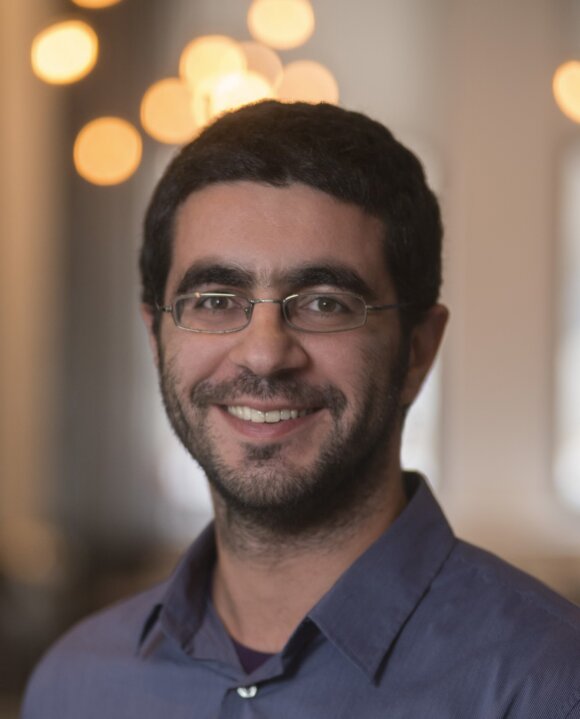
Look forward to our next Distinguished Seminar Series Speaker, Eftychios Pnevmatikakis Ph.D., Research Scientist at Reality Labs at Meta. Dr. Pnevmatikakis earned his doctorate in Electrical Engineering from Columbia University, where he also served as a Postdoctoral Research Scientist in the Department of Statistics and the Center for Theoretical Neuroscience. Since 2020, Eftychios has been contributing to innovative research at META Reality Labs, focusing on developing EMG-based neuromotor interfaces. |
|
|
| |
|
Columbia AI Summit
Columbia University's AI Summit on March 4th showcased the rich and interdisciplinary AI research taking place across its Morningside, Manhattanville, and Medical Center campuses. The event featured sessions and workshops spanning fields from healthcare to the humanities. The keynote address was delivered by Sami Haddadin, Director of the Munich Institute of Robotics and Machine Intelligence and Vice President for Research at MBZUAI.
ARNI's Director, Richard Zemel, led the opening panel session on "New Frontiers of AI." Alongside him, ARNI faculty members Christos Papadimitriou and Elias Bareinboim delivered lightning talks, exploring the foundational principles of AI advancements and their broad impact on industry and society. Professor Zemel also welcomed students and faculty attending the School of Engineering's Demo Session, which featured cutting-edge research, including examples of motor learning and embodied intelligence on dexterous robot hands. |
| |
|
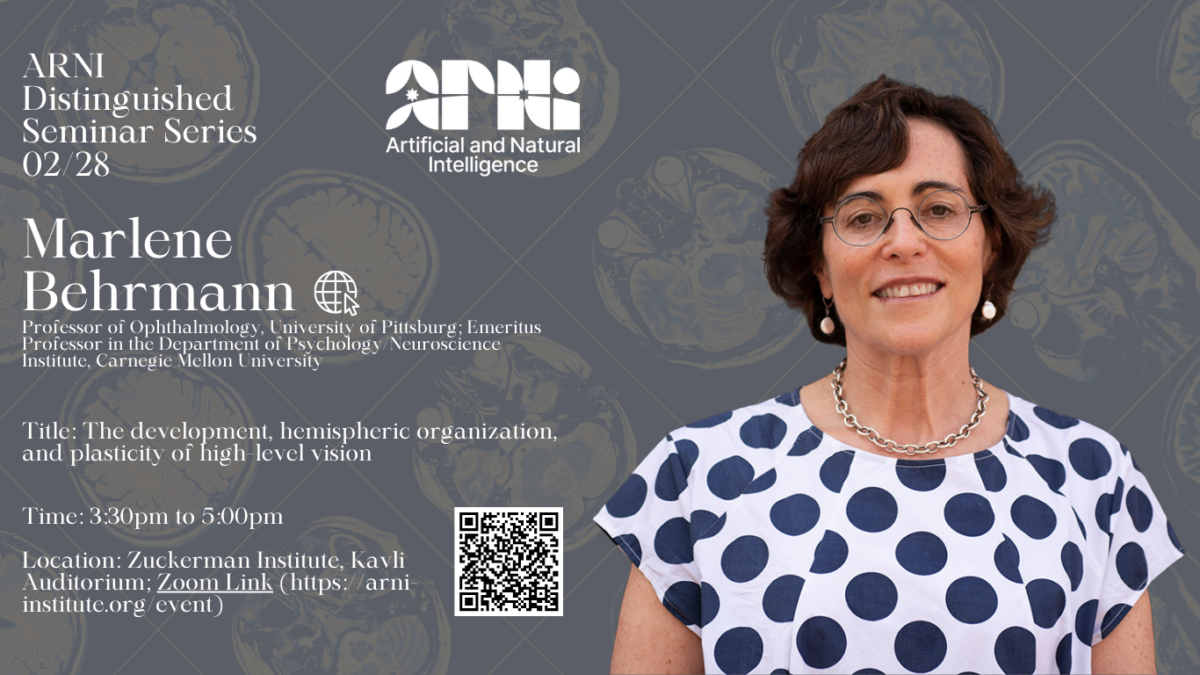
ARNI Distinguished Seminar Speaker: Dr. Marlene Behrmann
On February 28th, Dr. Marlene Behrmann gave a talk titled "The Development, Hemispheric Organization, and Plasticity of High-Level Vision," offering new insights into how the brain processes faces and words. While traditional research suggested a strict left-right hemisphere division—words in the left, faces in the right—Dr. Behrmann’s findings reveal a more flexible and distributed organization that differs across individuals. Her work highlights the brain’s adaptability, challenging long-held assumptions and advancing our understanding of visual processing.
Bio:
Dr. Marlene Behrmann joined the Department of Ophthalmology at the University of Pittsburgh School of Medicine, where she holds the John and Clelia Sheppard Chair, in 2022. She also holds the position of Emeritus Professor at Carnegie Mellon University. Dr. Behrmann’s research is concerned with the psychological and neural bases of visual processing, with specific attention to the mechanisms by which the signals from the eye are transformed into meaningful percepts by the brain |
| |
|
ARNI's Research Highlight |
| |
|
Adaptation Optimizes Sensory Encoding for Future Stimuli |
|
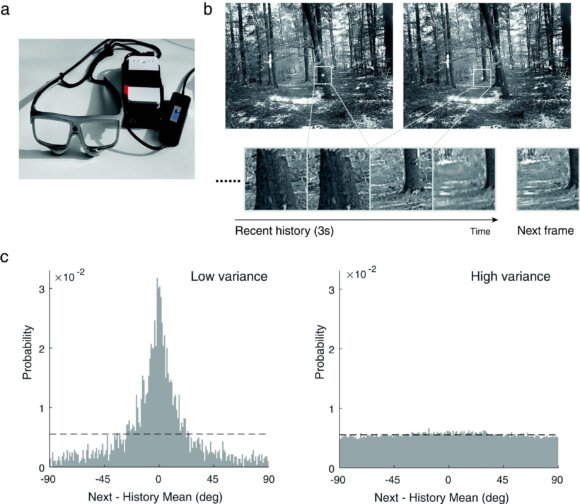
The ARNI project Adaptive Neural Information Processing Systems has led to the recent publication of "Adaptation Optimizes Sensory Encoding for Future Stimuli" in PLOS Computational Biology (January 2024). ARNI faculty Alan Stocker and his team proposed that sensory adaptation is not merely reactive but proactively optimizes visual encoding for future stimuli. By analyzing human perception, natural visual input, and neural network models, the study demonstrates how adaptation reallocates coding resources to enhance accuracy where it is needed most. These findings suggest a predictive role of adaptation in shaping sensory processing. |
|
|
| |
|
ARNI in NYC/EDC |
|
ARNI's collaboration with the New York Hall of Science was featured in the NYC AI Advantage Report, that aims to establish New York as an AI capital. The report highlights the growing number of AI startups (2000+), 27B in funding, and the outstanding talent pipeline of more than 40,000 AI experts working in industry and top universities in NYC. With the potential to reach up to 500,000 people, the report emphasizes ARNI’s partnership with NYSCI in enhancing the public understanding of AI and natural intelligence. |
|
|
| |
|
ARNI Working Groups
ARNI Frontier Models for Neuroscience and Behavior Working Group (Priorly: Animal Behavior)
- Summary: The inaugural meeting will begin with a short talk summarizing the landscape of foundation models for neuroscience and behavior, highlighting recent advances, key challenges, and opportunities for improvement. This will be followed by an open discussion to define the group’s collaborative focus and shared priorities.
- On going working group led by Liam Paninski's Group
- Contact Mehdi Azabou [email protected] for more information
ARNI WG Multi-resource-cost optimization of neural network models
- Summary: Neural network models are typically designed with a fixed architecture, determining the number of nodes, connectivity, and timesteps for backpropagation. While this approach helps limit resource requirements and optimize performance, it restricts the ability to explore tradeoffs between space, time, energy, and error. To address this, we aim to develop methods for quantifying resource costs and optimizing models to balance multiple constraints efficiently, benefiting both neuroscience and AI development.
- On going working group led by Nikolaus Kriegeskorte's Group
- Contact Eivinas Butkus [email protected] or Josh Ying [email protected] for more information
ARNI Biological Learning Working Group
- Summary: The Biological Learning Working Group focuses on figuring out how the brain’s neural networks decide which connections (synapses) to adjust to improve at tasks—a process called "credit assignment.
- On going working group led by Ken Miller's Group and MILA
- Contact Colin Bredenberg at [email protected] for more information
ARNI Continual Learning Working Group
- Summary: The group's focus will be on continual learning in large language and vision models. We will begin with a review of the continual learning setting, some common high-level approaches, and popular applications, before diving into more recent research (mostly on LLMs).
- On going working group led by Rich Zemel, Kathy McKeown, Elias Bareinboim
- Contact Tom Zollo at [email protected] for more information
|
| |
|
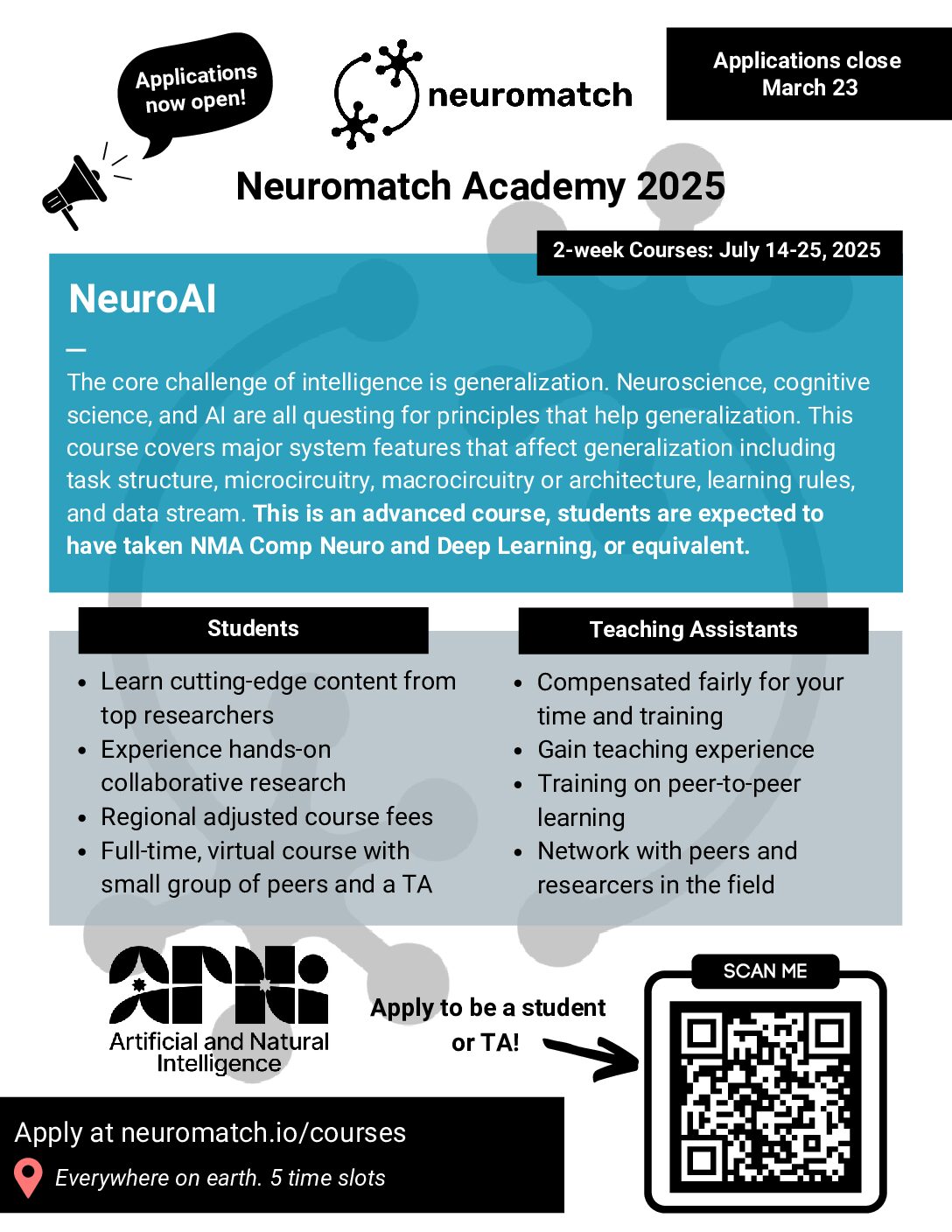
Join a global community of experts and peers, enhance your problem-solving abilities, and build a supportive network that champions accessibility to quality science education for everyone. This course explores key system features that impact generalization, including task structure, microcircuitry, macrocircuitry or architecture, learning rules, and data streams. Don’t miss this unique opportunity to expand your knowledge and skills.
Course Details:
Course Name: Neuromatch Academy NeuroAI Course
Dates: July 14th – 25th, 2025
Course Format: Synchronous virtual
Applications Close: Sunday, March 23rd, midnight in your time zone
Requirements:
Students are expected to be familiar with Python and have foundational science skills in math, in addition to completing NMA CN and DL courses or equivalent. This is an advanced course.
Teaching Assistants should have strong Python skills and a background in neuroscience and AI.
Apply Now: https://lnkd.in/eMiiBGS
Should you have any questions or need further information, feel free to reach out to Neuromatch Academy at [email protected]. |
| |
|
We would like to highlight ARNI achievements in future newsletters. Please share with us your events, papers, presentation, or any news you want to share with the ARNI community! |
| |
|