|
Emerging Trends in AI Workshop
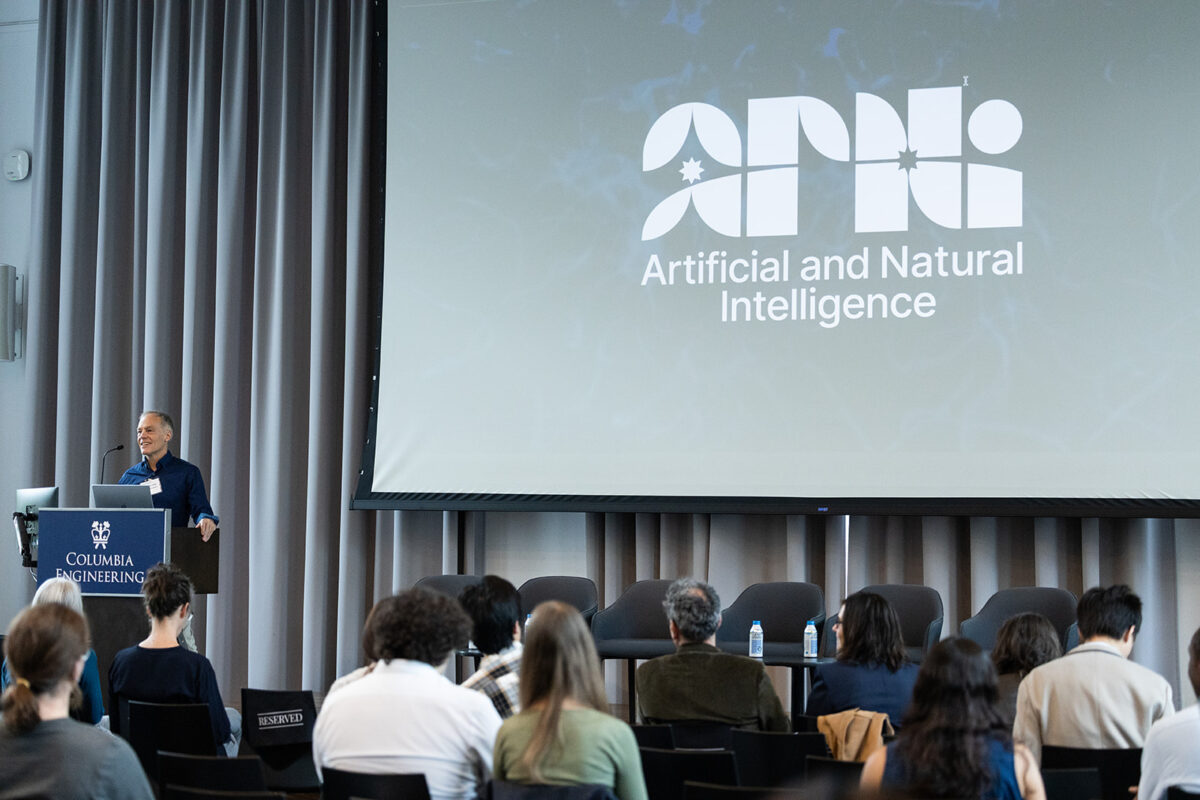
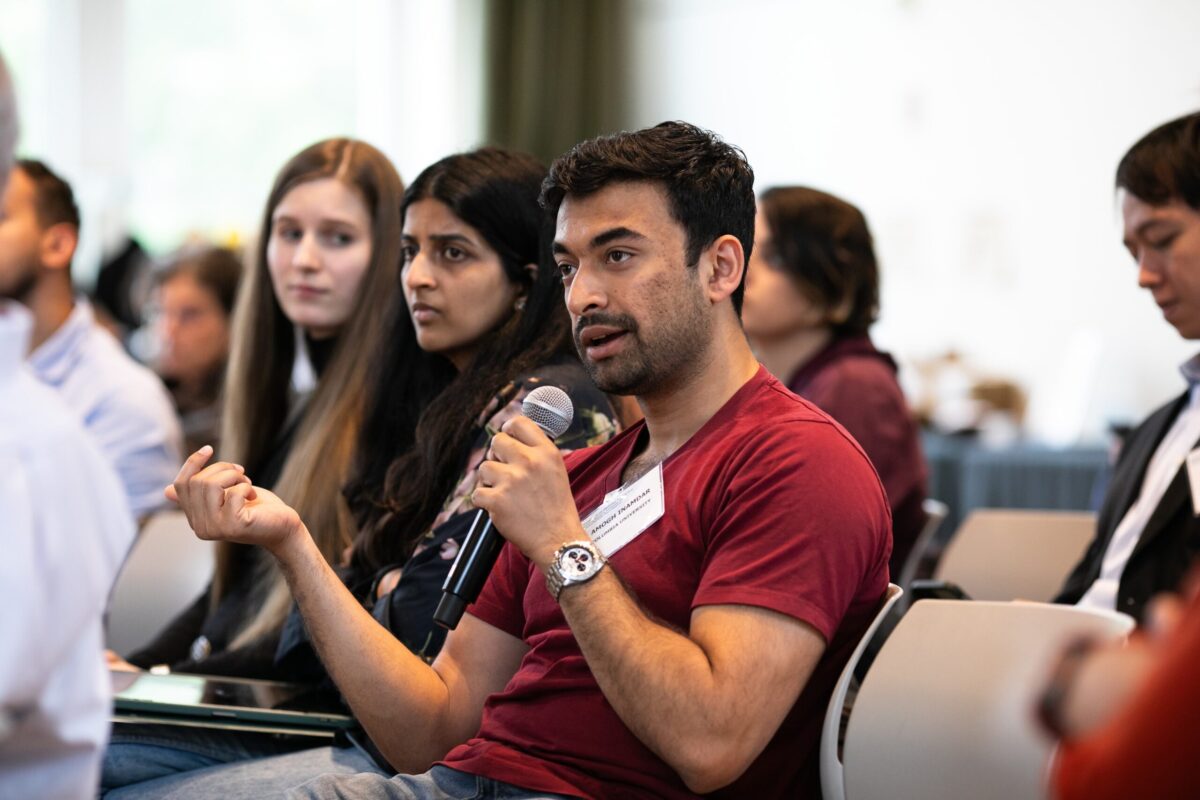
On May 5–6, ARNI co-hosted the "Emerging Trends in AI: Exploring Resilience, Robustness, and the Future of Synthetic Data in Research" workshop in collaboration with Columbia Engineering and the Simons Institute for the Theory of Computing. This two-day event brought together a diverse group of researchers from AI, neuroscience, and cognitive science to explore two timely and interconnected topics: resilience and robustness in biological and artificial systems, and the use of synthetic data in AI research. ARNI was represented by its Director Richard Zemel and Nikolaus Kriegeskorte. We also were pleased to welcome Adam Klivans, Director of the NSF AI Institute for Foundations of Machine Learning (IFML), as one of the distinguished participants.
Discussions on resilience examined how both brains and AI systems respond to challenges, highlighting opportunities for cross-fertilization between neuroscience and machine learning. Sessions on synthetic data addressed its growing role in training and evaluating AI systems, with a focus on practical applications, ethical implications, and the need for transparency in its generation and use. The talks and lively panel discussions throughout the workshop showcased ARNI’s commitment to fostering interdisciplinary collaboration.
Article: Brains Behind the Bots: Neuroscience’s Big Role in the future of AI
Video Recordings |
| |
|
NSF National AI Institutes highlighted at the AI+Expo for National Competitiveness
NSF participated with its own booth at the AI+Expo for National Competitiveness, held on June 2–4, Walter E. Washington Convention Center, Washington D.C. featuring researchers from three NSF programs that support the development and translation of breakthrough AI technology.
Specifically, the National AI Research Institutes, the Engines program, and SBIR. The event brought together leaders from industry, government, and academia to showcase cutting-edge AI innovations. The AI Institute for Agent-based Cyber Threat Intelligence and Operation (ACTION) represented all 27 NSF AI Institutes. Read more here! |
| |
|
2025 School and University Faculty Awards |
|
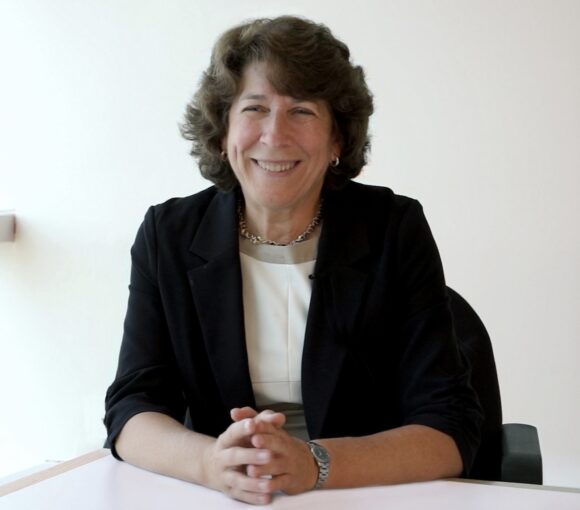
ARNI faculty member Kathy McKeown, the Henry and Gertrude Rothschild Professor of Computer Science, has been awarded the Faculty Mentoring Award! Professor McKeown played a key role in helping ARNI secure an REU suppliment, and this summer, her lab will be mentoring one of ARNI's REU students—an example of her outstanding commitment to student development and mentorship. |
|
|
| |
|
AER Symposium
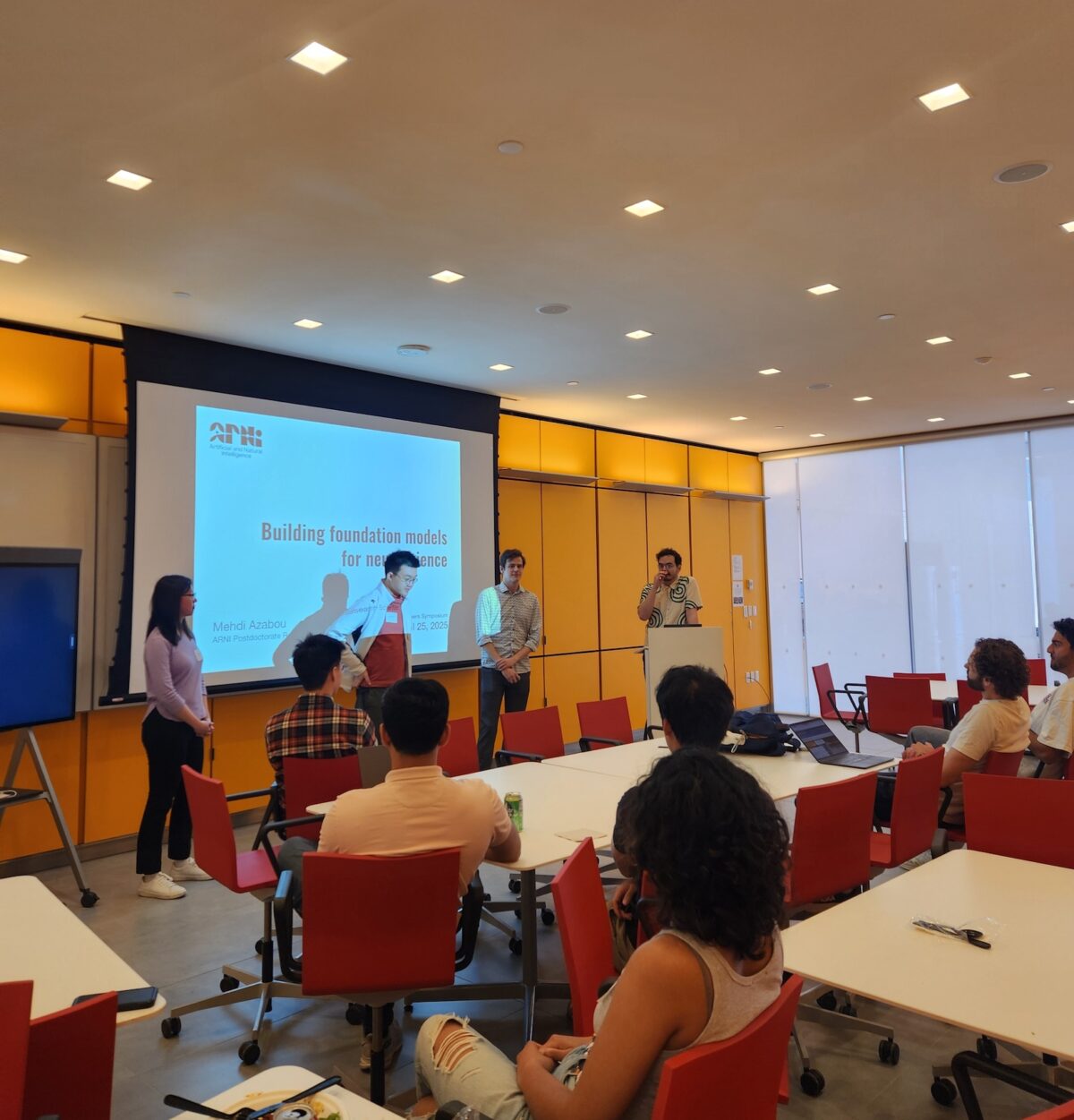
On April 25th, the ARNI Emerging Researchers (AER) Symposium at Columbia’s Zuckerman Institute brought together trainees and postdocs from partner institutions for research presentations, career talks, and networking. ARNI postdoctoral fellows Mehdi Azabou and Haozhe Shan shared their scientific work and career journeys, offering insights into the transition to postdoc life and broader goals in both academia and industry. A lively panel followed, exploring research goals, academic trends, and real-world applications. The event concluded with a group discussion exploring the synergies between neuroscience and artificial intelligence, highlighting methodological lessons and sparking new interdisciplinary research questions. The Symposium united emerging researchers across ARNI institutions, sparking dialogue, building community, and laying the groundwork for lasting collaborations. AER also organizes a monthly seminar series where graduate students discuss their ongoing research and ideas. Currently, Ben Eyre (CU), Dongrui Deng (CMU), and Katherine Xu (UPenn) lead AER initiatives. |
| |
|
Saturday Science
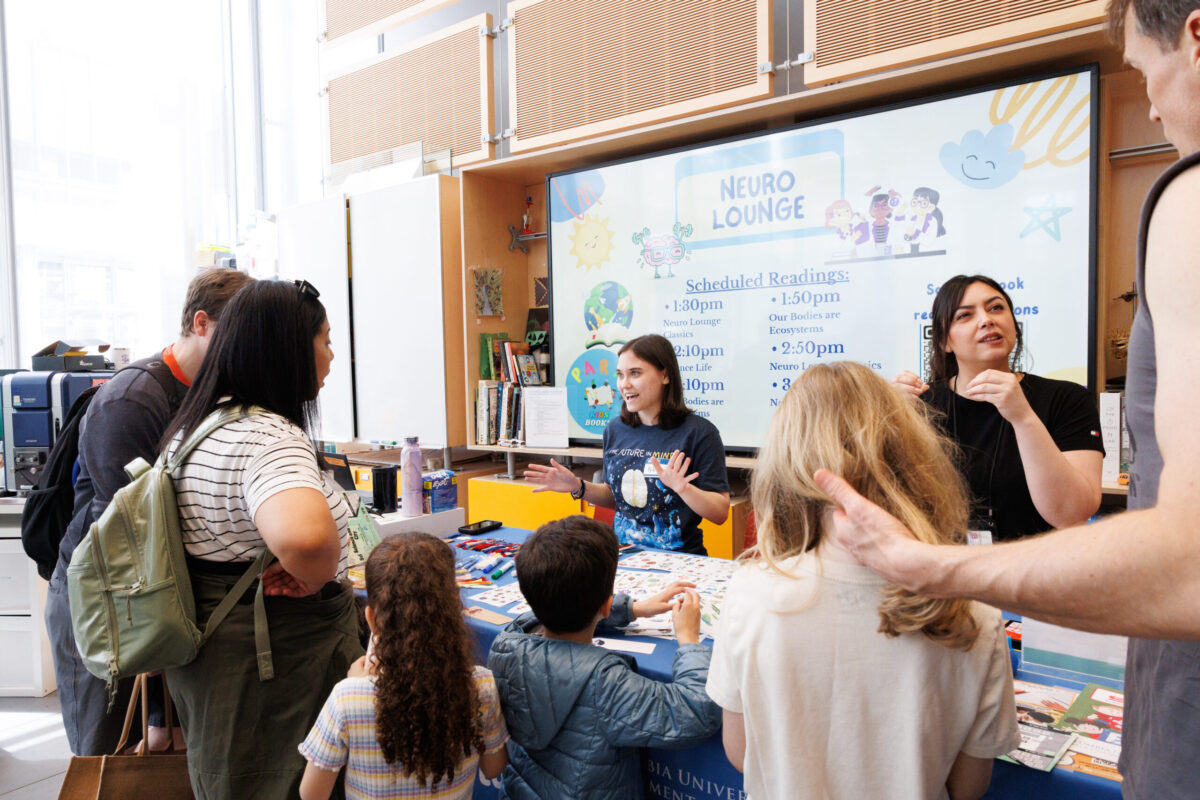
ARNI partnered with Columbia Neuroscience Outreach (CUNO) and the Zuckerman Institute Public Programs to host two hands-on learning stations at the April 19th Saturday Science public engagement event. Designed to make concepts in neuroscience and AI accessible to young learners, the stations offered engaging and interactive ways to explore how machines—and brains—make sense of the world. At one station, kids became “AI detectives,” using visual clues to build networks on a corkboard. Red strings showed feature “weights,” emulating how neural networks process information to identify hidden animals. The second station used origami-style worksheets to teach neural networks. Simple cuts showed decision boundaries, while folds represent hidden layers to solve complex tasks, illustrating how deeper networks solve complex problems. ARNI regularly partners with ZI Public Programs and student-led groups like STEM Starters and CUNO to create engaging activities for youth and families centered on shared principles of natural and artificial intelligence.
Saturday Science events will resume next academic year. |
| |
|
Girls' Science Day
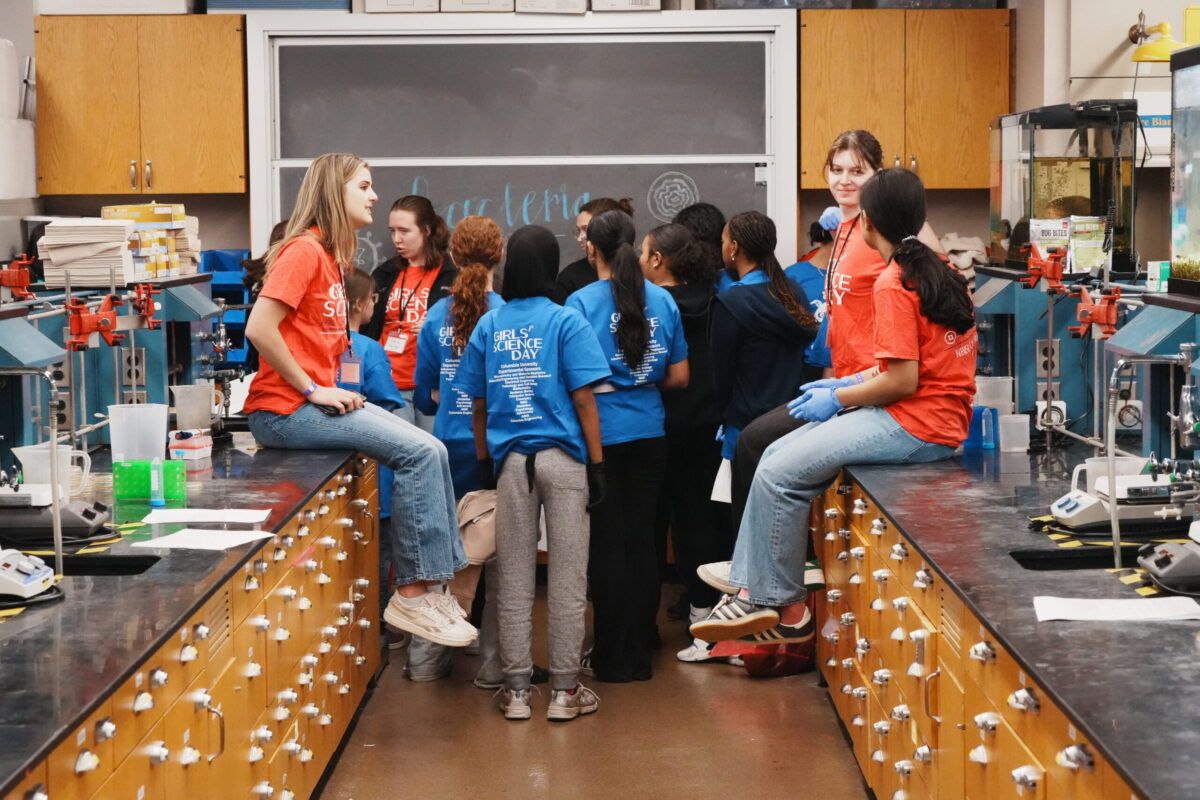
On April 19, ARNI co-hosted Saturday Science with CUNO, offering a pop-up hands-on STEM activities day to K-12 students in the community. It featured two engaging stations centered on neurons. Adapted from Computers vs The Brain, one station used a modified image classifier game, while the other offered an origami-based activity. Both helped elementary school students explore how neural networks and the human brain process decisions. |
| |
|
ARNI Working Group Updates |
| |
|
ARNI Working Groups
ARNI Frontier Models for Neuroscience and Behavior Working Group (Priorly: Animal Behavior)
- Summary: The inaugural meeting will begin with a short talk summarizing the landscape of foundation models for neuroscience and behavior, highlighting recent advances, key challenges, and opportunities for improvement. This will be followed by an open discussion to define the group’s collaborative focus and shared priorities.
- Next session: Event details
ARNI WG Multi-resource-cost optimization of neural network models
- Summary: Neural network models are typically designed with a fixed architecture, determining the number of nodes, connectivity, and timesteps for backpropagation. While this approach helps limit resource requirements and optimize performance, it restricts the ability to explore tradeoffs between space, time, energy, and error. To address this, we aim to develop methods for quantifying resource costs and optimizing models to balance multiple constraints efficiently, benefiting both neuroscience and AI development.
- Next Session: Check out our events page for updates
ARNI Biological Learning Working Group
- Summary: The Biological Learning Working Group focuses on figuring out how the brain’s neural networks decide which connections (synapses) to adjust to improve at tasks—a process called "credit assignment.
- Next Session: Check out our events page for updates
ARNI Continual Learning Working Group
- Summary: The group's focus will be on continual learning in large language and vision models. We will begin with a review of the continual learning setting, some common high-level approaches, and popular applications, before diving into more recent research (mostly on LLMs).
- Next Session: Check out our events page for updates
|
| |
|
We would like to highlight ARNI achievements in future newsletters. Please share with us your events, papers, presentation, or any news you want to share with the ARNI community! |
| |
|