|
Continual Learning with Columbia Business School!
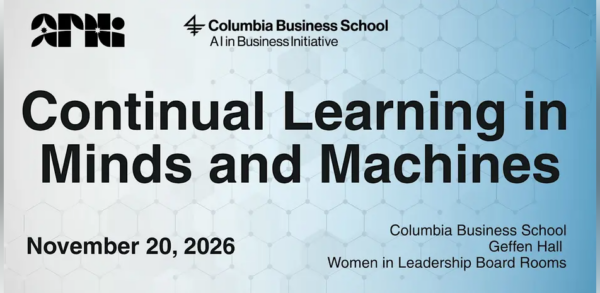
Co-organized by ARNI and Columba and Columbia Business School’s AI in Business Initiative, this workshop will bring together leading researchers in machine learning, neuroscience,and cognitive science, alongside industry experts to explore how humans and AI systems learn and adapt over time. Discussions will focus on continual learning, the role of biological memory in informing AI, and how to build AI systems that learn effectively from experience.
Invited speakers
|
| |
|
!!Publication Highlight!!
Nature Study Reveals How Neural Diversity Supports Flexible Computation
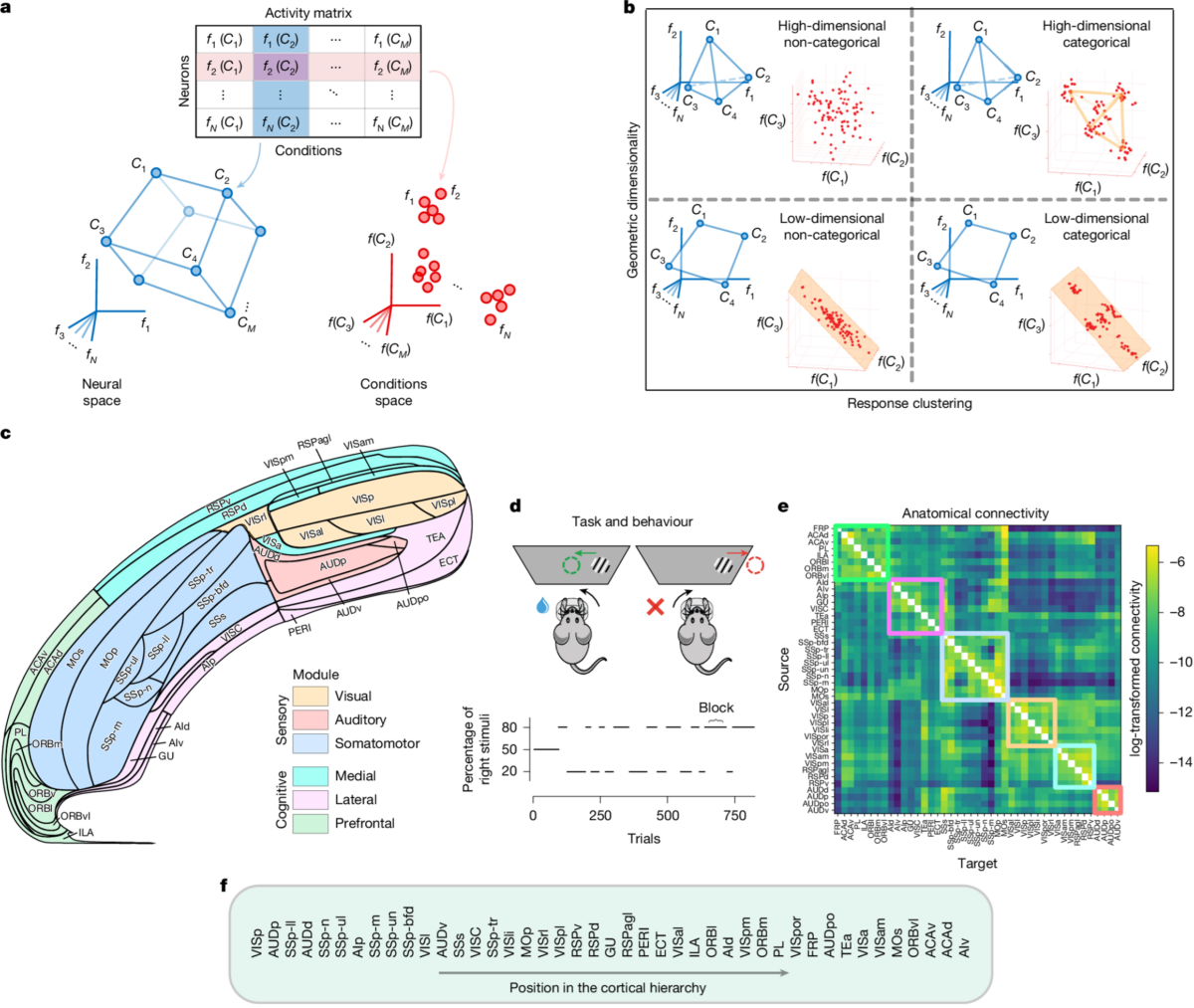
A new study published in Nature, "Rarely categorical, highly separable representations along the cortical hierarchy", co-led by ARNI faculty Stefano Fusi and Liam Paninski, challenges traditional views of how the brain organizes information. Analyzing more than 14,000 neurons across 43 cortical regions, researchers found that neurons rarely form distinct functional categories within individual brain regions, instead exhibiting highly diverse responses. While functional organization emerges at the whole-cortex level, this local neural diversity enables high-dimensional, highly separable representations that support flexible computation. The findings reveal fundamental principles of how the brain encodes information, with potential implications for understanding biological and artificial intelligence. |
| |
|
Another Successful Annual Retreat!
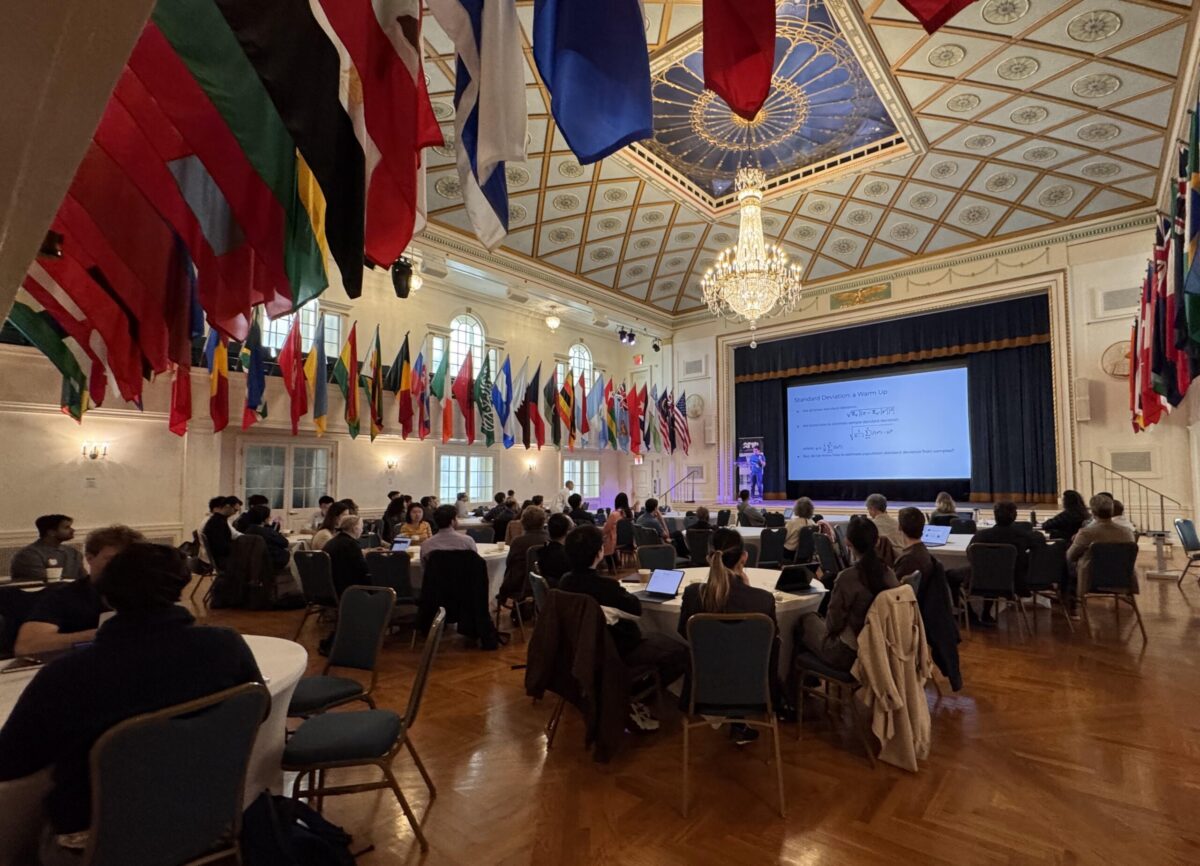
The 2026 ARNI Annual Retreat brought our community together for two days of exciting science, new ideas, and important conversations about ARNI’s future.
It was energizing to bring together the ARNI community at Columbia to share progress across our research portfolio, strengthen connections across disciplines and institutions, and, most importantly, think collectively about the future of ARNI as we begin shaping our vision for ARNI 2.0.
A special thank you to our outstanding keynote speakers, Kyunghyun Cho, Eero Simoncelli, and Tim Lillicrap, for sharing their perspectives and engaging so actively with our community.
It was wonderful to hear from ARNI’s faculty, students and postdoctoral fellows, who showcased research from our six flagship projects. We were also delighted to hear from Daphna Shohamy, Srini Turaga, Elias Issa, and Kimberly Stachenfeld, who shared their perspectives on exciting research directions at the intersection of AI, neuroscience, and cognition.
And many thanks to Sean Escola for moderating a terrific conversation on industry partnerships and the future of NeuroAI with Cole Hurwitz (IBM), Ida Momennejad (Microsoft), Kimberly Stachenfeld (Google DeepMind), Nathan Danielson (Flourish), and Patrick Mineault (Amaranth Foundation)
One of the most valuable parts of the retreat was hearing directly from our community in three dedicated renewal-planning discussions. The feedback reinforced the opportunity for ARNI to build a more integrated research portfolio around the two-way exchange between artificial and natural intelligence, using AI to advance our understanding of brains and cognition, while translating principles of natural intelligence into more adaptive, efficient, and generalizable AI.
Across the discussions, several themes repeatedly emerged: learning and adaptation, multimodal intelligence, resource efficiency, human-centered NeuroAI, and richer datasets and benchmarks that can connect experiments in natural and artificial systems. There was also a clear call to focus on ambitious shared challenges and outputs that can bring ARNI researchers together and have lasting value for the broader community.
Thank you to everyone who brought their ideas, energy, and constructive feedback that will be the ground to build our renewal vision in the next months. |
| |
|
Distinguished Seminar Series Speaker:
Alexandre Pouget
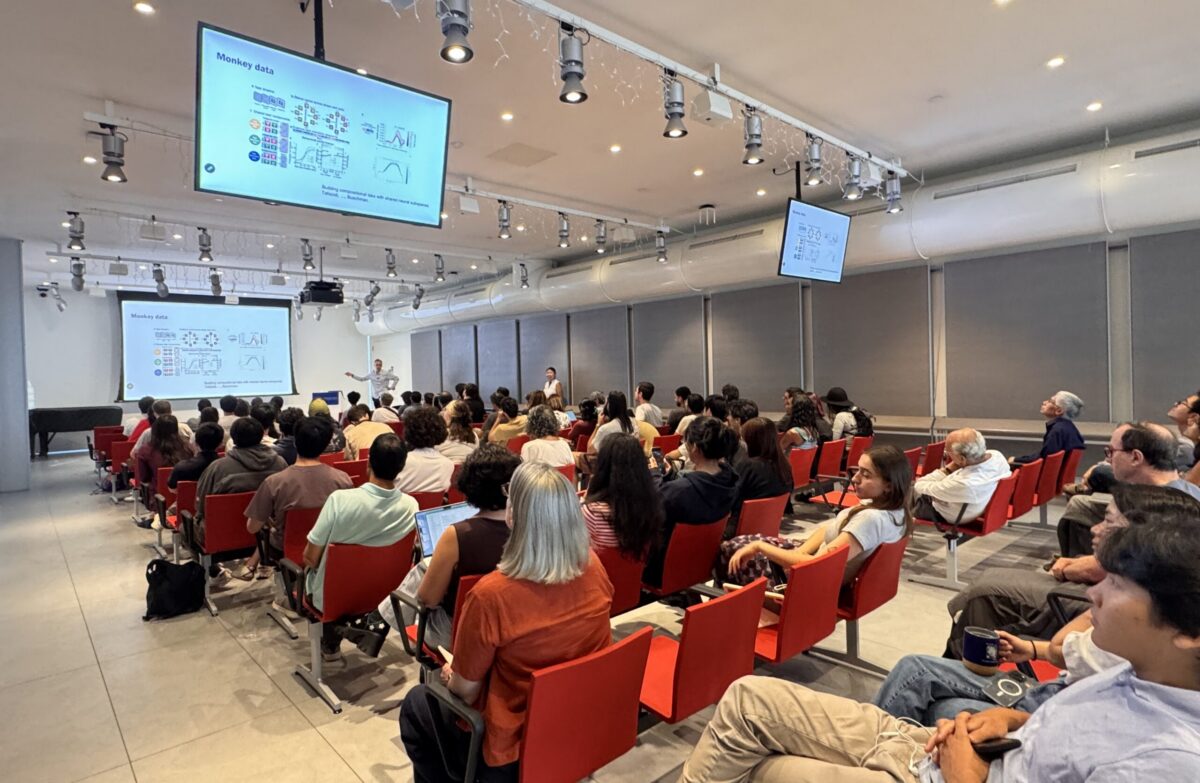
On September 9th, ARNI kicked off the semester with its Distinguished Seminar Series, featuring Alexandre Pouget, Professor at the University of Geneva. His engaging talk, “Neural Models of Compositionality,” welcomed a packed audience at the Zuckerman Institute’s Kavli Auditorium, bringing together individuals from across the AI and neuroscience communities.
Professor Pouget explored how recent advances in neural models are challenging the long-held view that compositionality, a capacity once thought to be primarily human, could not emerge in artificial neural networks. He discussed how compositional representations can support discrete hypothesis testing, few-shot learning, and, with the support of language, zero-shot generalization. He also presented work on compositional motor learning, in which world and planning models combine reusable motor primitives to efficiently solve complex movement tasks. Remarkably, these models capture key and often counterintuitive aspects of animal behavior, including rodent escape trajectories, offering new insights into the connections between artificial intelligence, neuroscience, and the mechanisms underlying general intelligence.
Thank you to Professor Pouget and everyone who joined us for such an exciting start to the semester! |
| |
|
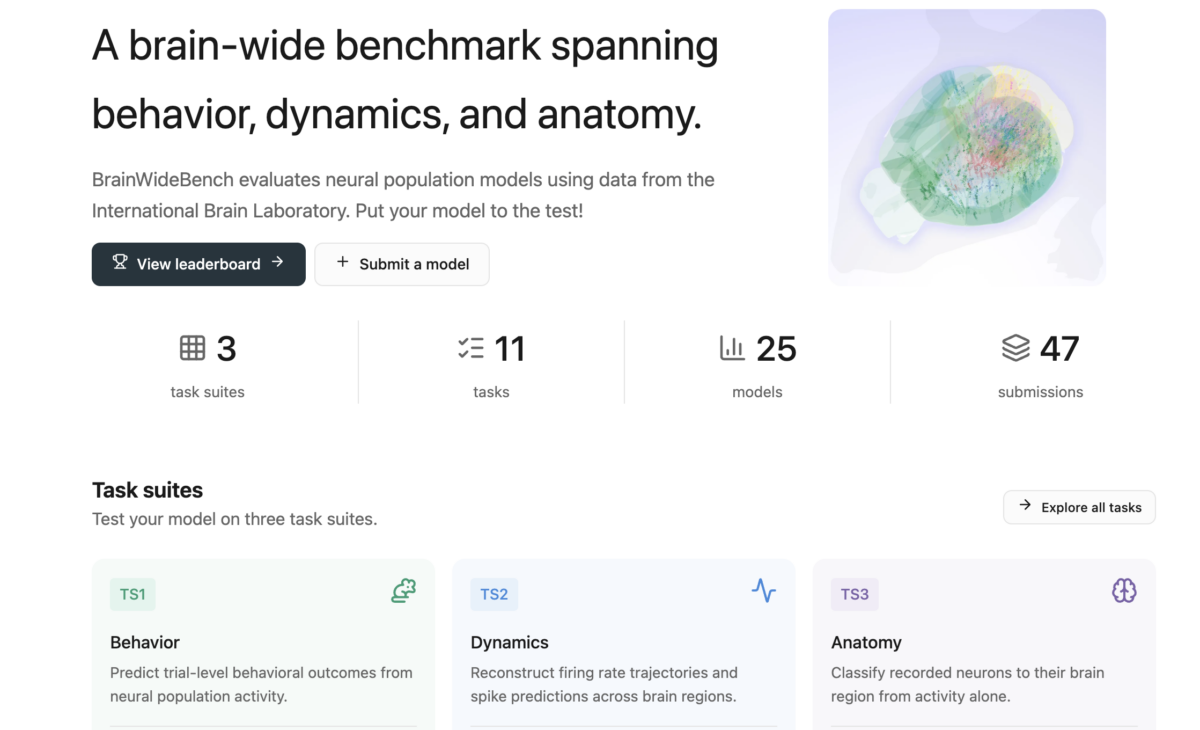
BrainWideBench
We’re excited to see BrainWideBench launch as an important new resource for advancing and rigorously evaluating general-purpose models of neural activity. Congratulations to Alexandre Andre and his team.
This work is part of ARNI’s flagship Neurofoundation Models project, with ARNI support for the work of Liam Paninski, Eva Dyer, Blake Richards, Matt Whiteway, and our alumni Mehdi Azabou and Cole Hurwitz. Building the shared foundations for the next generation of models that can learn across brains, animals, and tasks. |
| |
|
Summit for AI Institute Leadership with AIVO
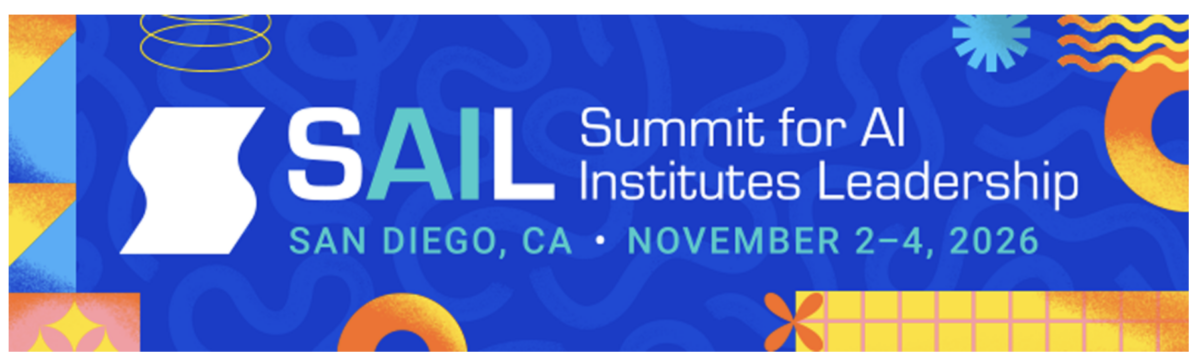
Once again, ARNI will join 29 other National AI Institutes for the annual Summit for AI Institutes Leadership (SAIL), a three-day conference held in San Diego this year that brings together institute leaders, researchers, and staff across the institutes.
ARNI's Director, Richard Zemel, will be joining a panel session on "The Science of AI: Research Progress in Foundational AI". Additionally, ARNI's Managing Director, Spyridon Mylonas, is co-chairing SAIL's planning committee this year.
SAIL fosters meaningful interactions, discussions, and connections among the Institutes, providing opportunities to showcase research, exchange ideas, build new connections, ask questions, and share best practices and challenges. The conference brings together key leadership from primary and sub-awardee sites to discuss the future of the Institutes and identify ways to strengthen and continuously improve their programs and impact. |
| |
|
ARNI's Distinguished Seminar Series
Stay tuned for the Fall and Spring 2027 semesters for an exciting new lineup of speakers! We’re thrilled to welcome more leading voices from the fields of AI and neuroscience to share their research, ideas, and insights with the ARNI community. |
| |
|
ARNI Suite of Research Resources |
| |
|
We’re building a shared library of research resources developed by the ARNI community including tools, datasets, and learning materials designed to advance NeuroAI for everyone. These resources are meant to support your projects and foster collaboration across ARNI and beyond.
Explore here: https://arni-institute.org/researchresources/ |
| |
|
ARNI Working Group Updates |
| |
|
ARNI Working Groups
ARNI Frontier Models for Neuroscience and Behavior Working Group (Priorly: Animal Behavior)
- Summary: The inaugural meeting will begin with a short talk summarizing the landscape of foundation models for neuroscience and behavior, highlighting recent advances, key challenges, and opportunities for improvement. This will be followed by an open discussion to define the group’s collaborative focus and shared priorities.
- Next session: Check out our events page for updates
ARNI WG Multi-resource-cost optimization of neural network models
- Summary: Neural network models are typically designed with a fixed architecture, determining the number of nodes, connectivity, and timesteps for backpropagation. While this approach helps limit resource requirements and optimize performance, it restricts the ability to explore tradeoffs between space, time, energy, and error. To address this, we aim to develop methods for quantifying resource costs and optimizing models to balance multiple constraints efficiently, benefiting both neuroscience and AI development.
- Next session: Check out our events page for updates
ARNI Biological Learning Working Group
- Summary: The Biological Learning Working Group focuses on figuring out how the brain’s neural networks decide which connections (synapses) to adjust to improve at tasks—a process called "credit assignment.
- Next Session: Check out our events page for updates
ARNI Continual Learning Working Group
- Summary: The group's focus will be on continual learning in large language and vision models. We will begin with a review of the continual learning setting, some common high-level approaches, and popular applications, before diving into more recent research (mostly on LLMs).
- Next Session: Check out our events page for updates
ARNI Language & Vision Working Group
- The ARNI Language & Vision Working Group aims to bring together researchers across neuroscience, cognitive science, computer science, and AI to collaboratively advance our understanding of how humans and machines construct multimodal experiences. Its goal is to create a space for discussing ongoing language- and vision-focused projects, identifying natural points of overlap, and transforming them into larger, interdisciplinary initiatives. Grounded in the idea that language and vision form a dynamic, symbiotic system rather than isolated modules, the group seeks to explore how this integration is represented in the brain and in the machine. Strengthening collaboration between these domains is essential for building the next generation of AI systems that learn from continual, multimodal input, reflect human cognitive principles, and ultimately support real-world human needs.
- Next session: Check out our events page for updates
- At the end of the news letter you can read more about the other working groups.
|
| |
|
We would like to highlight ARNI achievements in future newsletters. Please share with us your events, papers, presentation, or any news you want to share with the ARNI community! |
| |
|