
Neural Correlates of Contextual Sentence Processing / Empirical Evaluation of Assembly Theory in the Human Brain
PI: Tony Ro
Co-PI: Christos Papadimitriou, Columbia; Tatiana Emmanouil, CUNY


Abstract
These empirical studies will use electroencephalography (EEG) to examine the neural signatures for combining meaningful and related information from sentences across time. The milestones we will achieve include design of the experiment, generation of natural language stimulus materials, acquisition of EEG data recorded from 24 human subjects, analyses of the data, and manuscript preparation and submission. By assessing markers of neural activity that reflect discourse processing, this research will have implications for understanding the neural instantiation of language processing and natural intelligence in the human brain and should provide useful algorithms for enhancing large language models used in AI. A short-term goal of this research is to provide an empirical test of the assemblies theory, which proposes an intermediate level of organization of brain computation, on a scale far larger than that of individual neurons and synapses and realized by highly interconnected sets of assemblies. Longer-term goals include experiments to test assembly operations in other cognitive and neural processes (e.g., visual perception).
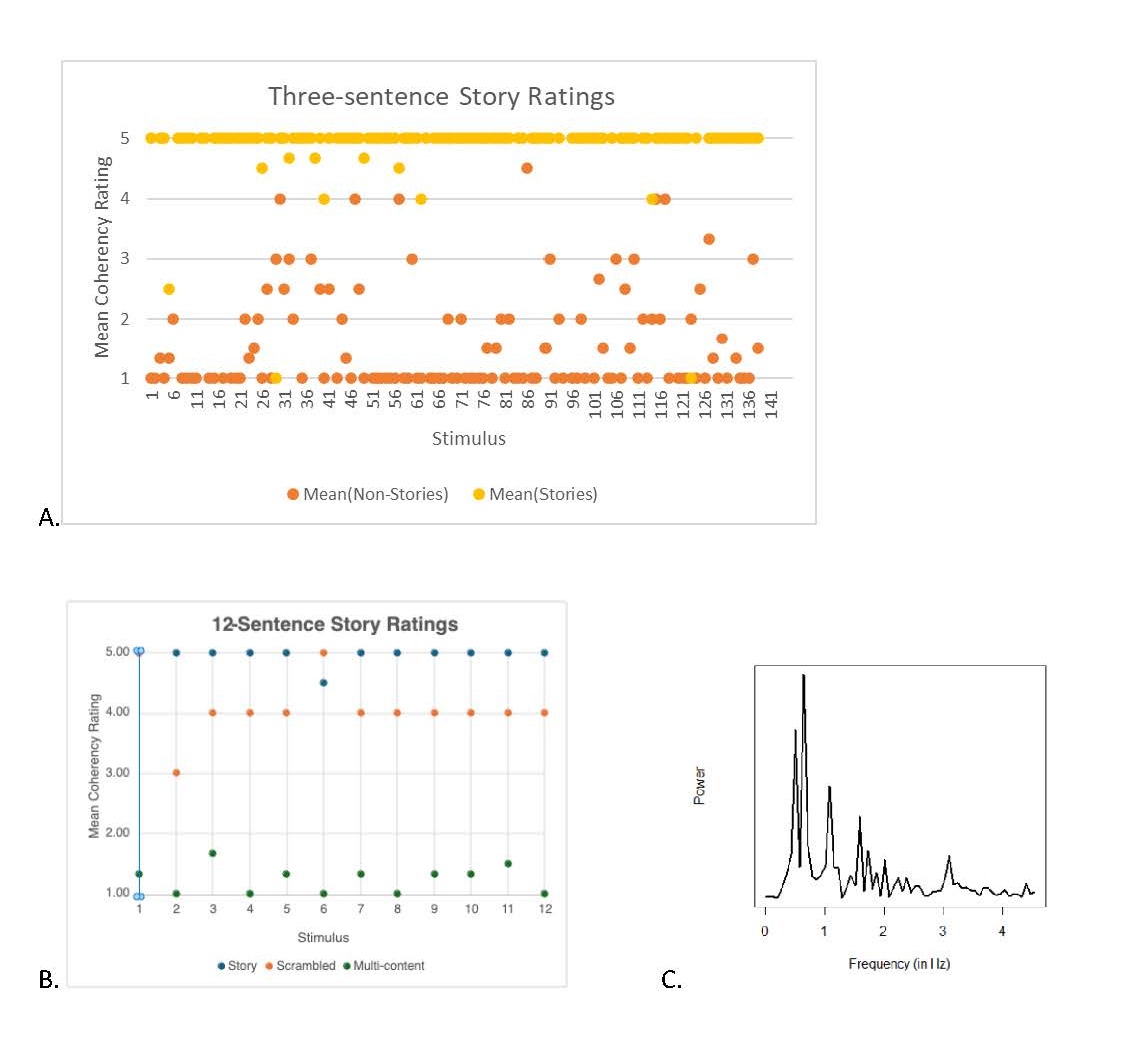
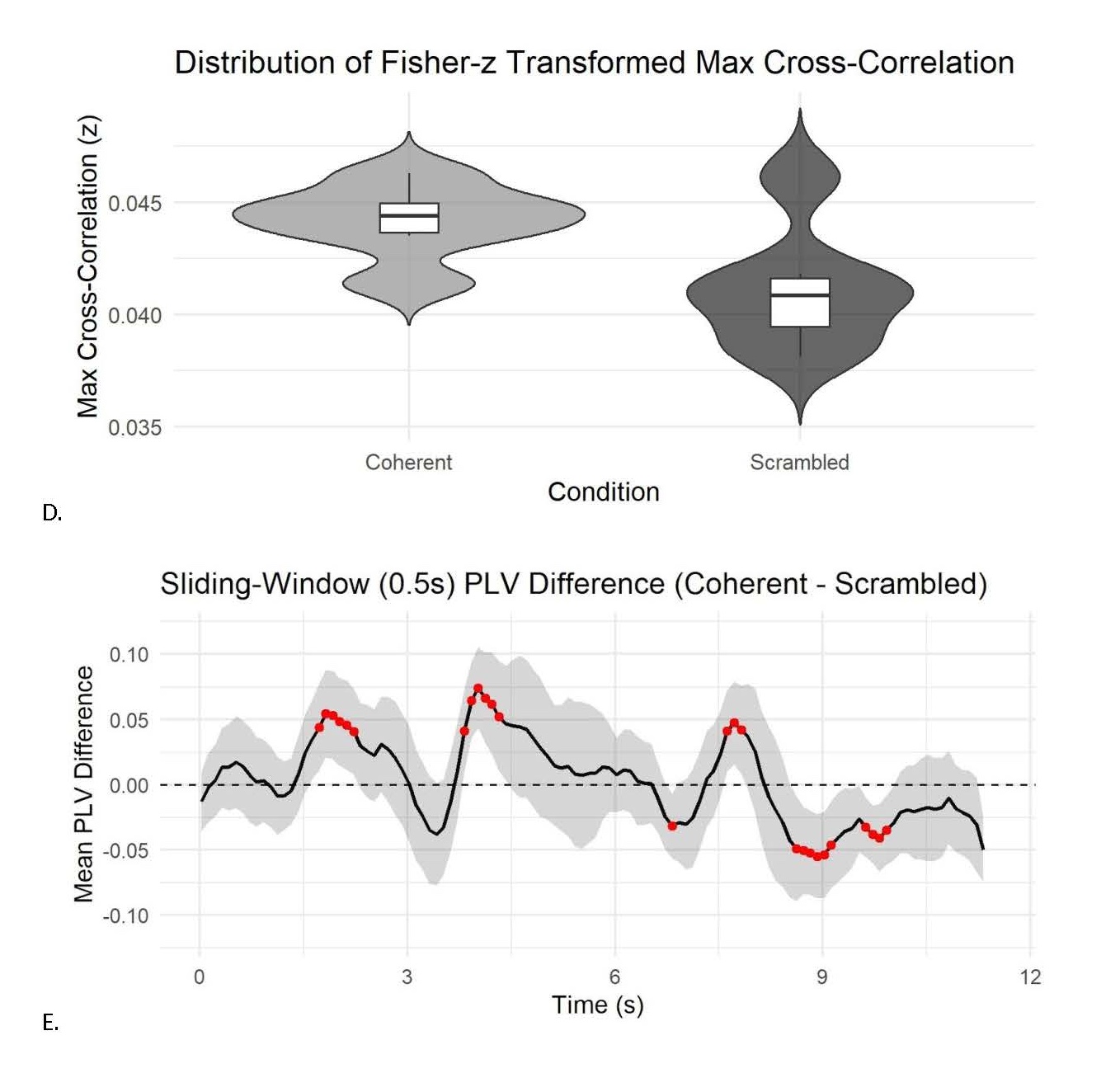
a) Preliminary data collected online for validating the 3 sentence stimuli; (b) the 12 sentence stimuli; (c) EEG preliminary data showing peaks at 3.125 Hz, 1.6 Hz, and 0.8 Hz reflecting integration at the word, phrase and sentence level; d) Cross-correlation between EEG signal and speech envelope; (e) Phase coherence for Coherent vs Scrambled stories
Publications
In progress
Resources
In progress