
Design, Integration, and AI-driven Modeling of Networked Electromagnetic Soft Actuators
PI: Nafiseh Ebrahimi
Co-PI: Mohammadreza Davoodi, Memphis; Xaq Pitkow, CMU



Abstract
The emerging field of soft robotics represents the foundation of future robotic systems with a wide range of applications in human–robot interaction, locomotion, and rehabilitation technologies [1]. A crucial component of soft robotics is a soft actuator that can be activated to generate desired motions. Unfortunately, there is a limited availability of actuators for rehabilitation applications that are portable and adaptable to varying joint geometries while simultaneously matching the response time and power density of mammalian muscles. Although various actuator types such as SEA/VSAs, shape memory alloys, pneumatic artificial muscles, and dielectric elastomer actuators offer unique advantages and challenges [3–8], they often face limitations in size, efficiency, or power requirements.In particular, SEA/VSAs rely on discrete elastic elements for compliance and are not intrinsically soft, which limits their conformability and suitability for wearable applications. Motivated by these challenges, we have recently designed a bio-inspired, scalable, flexible, and biocompatible Electromagnetic Soft Actuator (ESA) [2]. Our ESA provides a lightweight, portable, and responsive solution that offers a promising approach to alleviating these limitations [9,10]. A human skeletal muscle, composed of bundles of sarcomeres formed by actin and myosin filaments, behaves like a network of distributed soft actuators that are coordinated to generate force and motion. Similarly, a network of ESAs can be integrated to form an Artificial Muscle (AM) architecture. While prior work focused on the design and optimization of individual ESA units, the key challenge addressed in this project is the coordinated control and actuator selection within networks of ESAs to achieve desired motion while maintaining efficiency and preventing excessive thermal buildup. Our recent efforts focus on developing estimation and control strategies that enable accurate trajectory tracking and intelligent selection of active actuators within the network. Our long-term goal is to create and control an embodied agent with multiple artificial muscles capable of adaptive and efficient actuation.
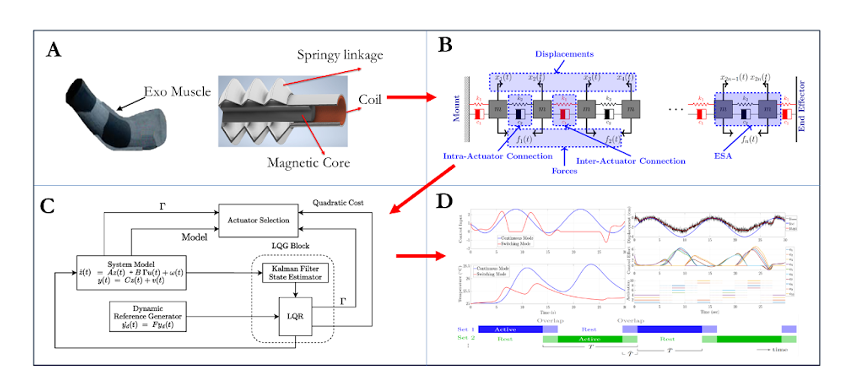
Figure1: An Integrated Modeling and Control Framework for Soft Electromagnetic Actuators.
Publications
- Zolfaghari, H., Ebrahimi, N., Pitkow, X., & Davoodi, M. (2025). Actuator Selection and Control of an Array of Electromagnetic Soft Actuators. Electronics, 14(18), 3682. https://doi.org/10.3390/electronics14183682
Resources
- Open-source code available on GitHub: https://github.com/NafisEbrahimi/Analytical-Modeling-for-ESA