|
Upcoming Workshops and Events |
| |
|
Save the New Date! ARNI Annual Retreat
November 17–18, 2025
We’re excited to announce that registration is now open for the ARNI Annual Retreat! Join us for two days of community-building big ideas, and forward-looking discussions that will shape the future of ARNI.
This year’s program features keynote talks, dynamic research presentations, and interactive sessions designed to spark collaboration and amplify our collective impact. Members of our external advisory board will also join!
ARNI members will receive a registration link directly. If you're an ARNI affiliate and would like to register, please contact [email protected]. |
| |
|
torch_brain Workshop
Collaboration between University of Pennsylvania & ARNI
November 12, 2025 to November 15, 2025 (Closed Event)
Understanding the brain means working with massive, complex datasets—but today’s tools remain fragmented and siloed. torch_brain is changing that. This open-source library offers a unified, modular framework for deep learning on neural data, lowering barriers to entry and enabling collaboration across labs, species, and modalities.
The upcoming workshop will bring together ARNI members from the Paninski group (Columbia), Richards (Mila), and postdoc Mehdi Azabou, alongside collaborator Eva Dyer (UPenn). Together, they’ll build new features, integrate models and datasets, and create interactive tutorials—laying the groundwork for a robust open-source ecosystem.
The team is also preparing a community-authored paper and launching broader adoption efforts through hands-on workshops and coding sessions at Penn, Columbia, and Mila. torch_brain is poised to become a central resource for the next generation of brain research- strengthening ARNI’s legacy in open, collaborative science. |
| |
|
NeurIPS 2025
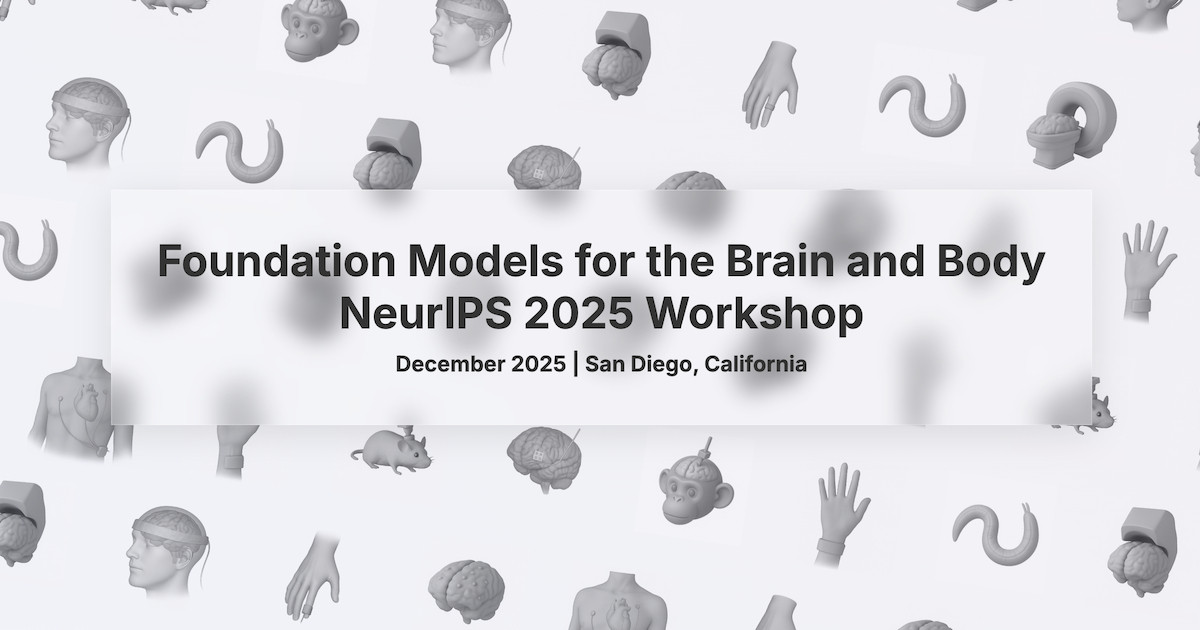
Foundation Models for the Brain and Body Workshop
December 2, 2025 to December 7, 2025
San Diego, California
We’re proud to announce that ARNI, together with Columbia, Stanford, MIT, Princeton, MILA, the Donders Institute, and Meta, is co-organizing the Foundation Models for the Brain and Body workshop at NeurIPS 2025. Out of 287 submissions, this workshop was one of just 55 selected, underscoring its importance to the global NeuroAI community.
The workshop will bring together leading researchers at the intersection of biosignals, neuroscience, and machine learning to chart the future of foundation models for neural, physiological, and behavioral data. With sessions on representation learning, cross-modal integration, and real-world applications, the program is designed to spark bold ideas and foster international collaboration.
Keynote Speakers:
- Hubert Banville, Meta
- Juan Helen Zhou, National University of Singapore
- Cuntai Guan, Nanyang Technological University
- Guillermo Sapiro, Apple, Princeton University
- Eva Dyer, University of Pennsylvania
This workshop reflects ARNI’s leadership in building bridges between AI and neuroscience, advancing the open dialogue needed to tackle the most ambitious challenges in NeuroAI.
We are grateful to our sponsors—Meta, Protocol Labs, Sophont, e184, and Synchron—for their generous support in making this workshop possible. |
| |
|
Congratulations to ARNI Postdoc Mehdi Azabou on securing $269,000 from Protocol Labs
We’re excited to announce that ARNI Postdoc Mehdi Azabou has secured $269,000 from Protocol Labs to push the boundaries of neuro-inspired AI.
This groundbreaking project will establish scalable self-supervised EEG foundation models-up to 700M parameters on the 20TB OpenNeuro corpus- to reveal how brain data can drive more adaptive, personalized AI systems. All models, code, and tools will be openly shared through torch_brain, reinforcing ARNI’s commitment to open science and innovation.
Big shout-out to Protocol Labs and our own Sean Escola for supporting Mehdi’s innovative work and ARNI. Their support also extends to the upcoming NeurIPS workshop, “Foundation Models for the Brain and Body”, further highlighting our shared vision for advancing AI inspired by the brain. |
| |
|
ARNI Associate and Postdoctoral Research Fellows
ARNI would like to introduce our Associate and Postdoctoral Research Fellows. Their outstanding research in AI and neuroscience is driving ARNI’s mission forward.
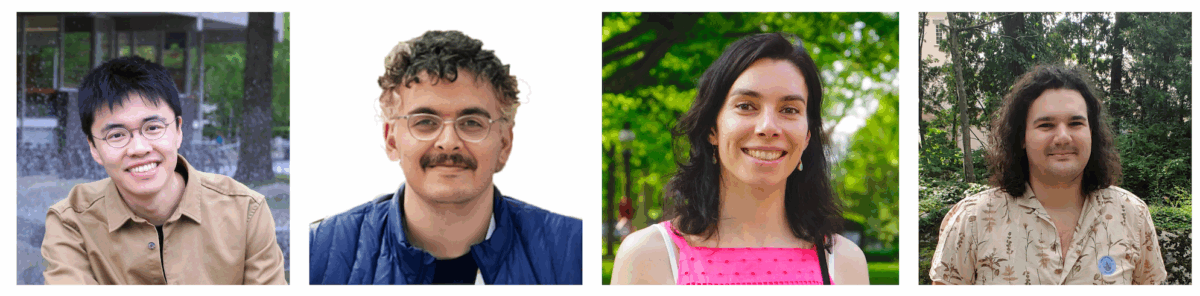
Haozhe Shan's research interests broadly span theoretical/computational neuroscience. He is particularly excited about (1) understanding how cognitive abilities emerge from neural computation and (2) developing approaches to work with large amounts of neural activity/connectivity data. Currently, Haozhe is working in collaboration Ashok Litwin-Kumar.
Mehdi Azabou is working in collaboration with Liam Paninski and Blake Richards. His goal is to rethink how we interface with the brain, developing models that can integrate with the next generation of artificial intelligence. Mehdi's current focus is on building neuro-foundation models: large-scale models designed to interpret and generalize across brain data from diverse modalities, species, tasks, and environments. The goal is to enable more capable brain-machine interfaces, drive scientific discovery, and create tools that help us better understand the brain, brain disorders, and neurodiversity.
Flora Bouchacourt's research focuses on the neurocomputational mechanisms that govern task learning and working memory. Over the years, she has integrated theoretical work across various levels of abstraction with model-driven data analysis. Her research at the ARNI leverages machine learning and neural network modeling to investigate how the brain builds strategies for learning new perceptual and reward-based decision-making tasks (often referred to as “learning-to-learn”). She is working in collaboration with Stefano Fusi, Larry Abbott, and Xaq Pitkow.
Max Dabagia is an ARNI postdoctoral fellow at CUNY Graduate School & ARNI, working in collaboration with Christos Papadimitriou, Tony Ro, and Tatiana Emmanouil. He is fascinated by the algorithmic perspective on the brain- the processes and structures which it uses to translate its experiences into behaviors, and especially to learn so quickly and flexibly. His long-term goal is to build theoretical and computational models of the brain, which both serve as concrete hypotheses about what these algorithms could be and as blueprints for more brain-like machine intelligence. Currently, he is exploring ways in which brain-like mechanisms could realize learning strategies radically different from the methods of contemporary deep learning. |
| |
|
ARNI 2025 Summer Programs Concluded
This summer marked an exciting milestone: the launch of ARNI’s inaugural Research Experiences for Undergraduates (REU) program in NeuroAI, supporting five outstanding undergraduates in their research journeys. We’re thrilled to mark the successful conclusion of the program, and we couldn’t be more excited about what our students accomplished.
This summer, five exceptional undergraduate students conducted cutting-edge research at the intersection of neuroscience and AI under the mentorship of ARNI faculty. As part of the Columbia Engineering SURE program, they also engaged with a vibrant academic community beyond our institute.
- Ahana Dey (Carnegie Mellon) – Investigating Emotion and Identity Geometric Facial Recognition Behavior in Artificial DNNs and Humans (Mentors: Elias Issa and Seojin Lee)
- Zora James (Tuskegee University) – Differences in Processing Static Grating and Natural Images (Mentor - Tahereh Toosi)
- John Lee (Hunter College) – Video Next Frame Prediction with PredNet: Capturing Higher-level Semantics (Mentor - Haozhe Shan)
- Medha Morparia (Barnard College) – Improving Detection of Bipolar Disorder and PTSD with Natural Language Processing (Mentors - Julia Hirschberg and Ziwei Gong)
- Ellie Yang (Amherst University) – Evaluation of LLMs' Emotion Generation Across Affective Sites (Mentors - Kathleen McKeown and Nick Deas)
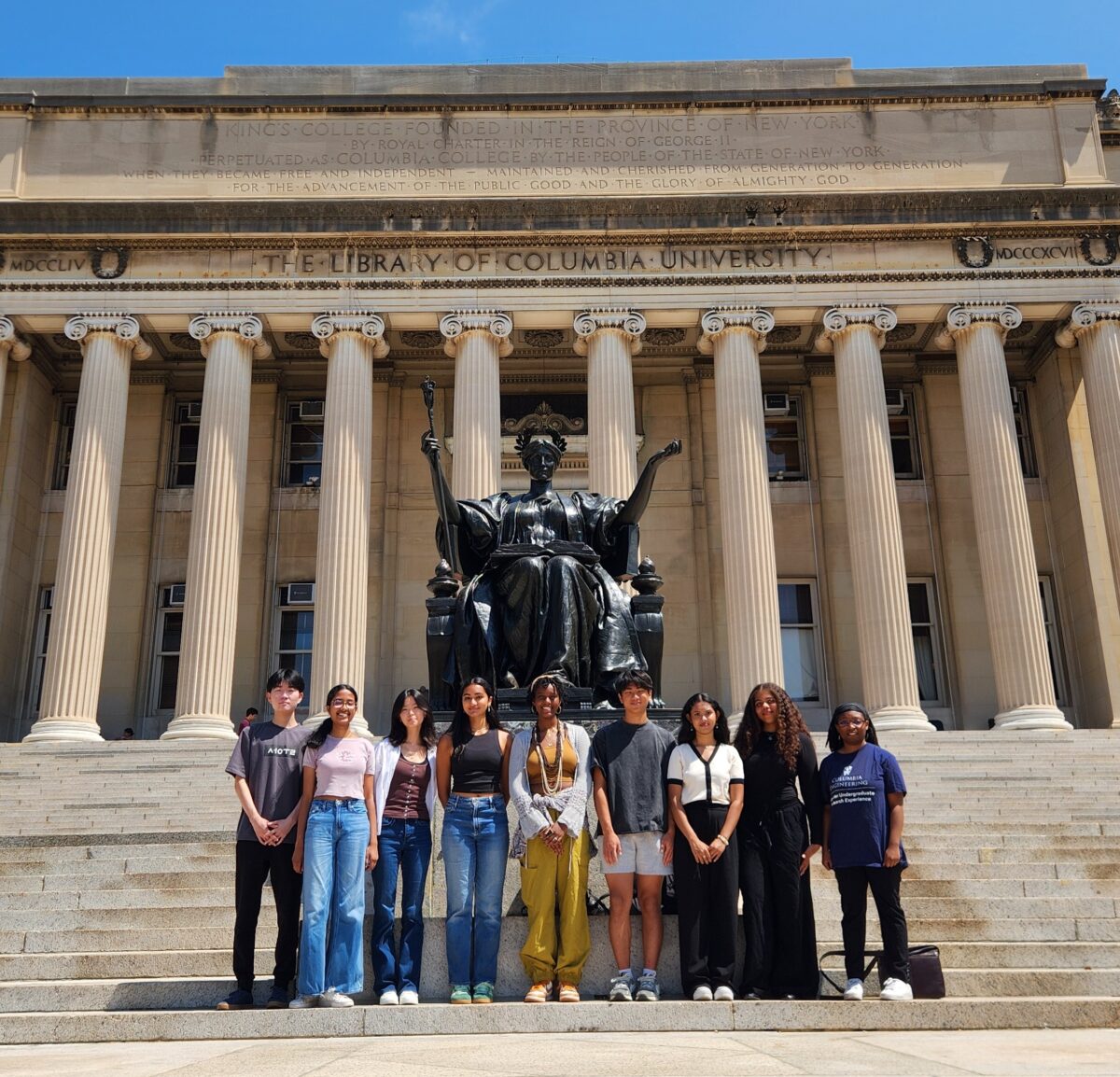
We also recently said goodbye to our final four summer students, who completed a 6-week research program at Columbia as part of the ARNI Youth Residency program with the New York Hall of Science (NYSCI).
This summer, we were proud to host:
High school students Leilanie Lewis and Jayden Wong (via Columbia Engineering’s Engineering the Next Generation program, Center for Smart Streetscapes (CS3) track), who presented their project “Privacy in a Data- Driven World” aimed at helping their peers understand how personal data is collected, used, and sometimes misused.
Undergraduates Elia Moses and Tasnim Haque, who conducted independent AI research under ARNI postdoc Mehdi Azabou. Their work explored the AI world, including machine learning methods, neural networks, foundation models, computer vision, and large language models. |
| |
|
ARNI Suite of Research Resources |
| |
|
We’re building a shared library of research resources developed by the ARNI community including tools, datasets, and learning materials designed to advance NeuroAI for everyone. These resources are meant to support your projects and foster collaboration across ARNI and beyond.
Explore here: https://arni-institute.org/researchresources/ |
| |
|
ARNI Working Group Updates |
| |
|
ARNI Working Groups
ARNI Frontier Models for Neuroscience and Behavior Working Group (Priorly: Animal Behavior)
- Summary: The inaugural meeting will begin with a short talk summarizing the landscape of foundation models for neuroscience and behavior, highlighting recent advances, key challenges, and opportunities for improvement. This will be followed by an open discussion to define the group’s collaborative focus and shared priorities.
- Next session: Check out our events page for updates
ARNI WG Multi-resource-cost optimization of neural network models
- Summary: Neural network models are typically designed with a fixed architecture, determining the number of nodes, connectivity, and timesteps for backpropagation. While this approach helps limit resource requirements and optimize performance, it restricts the ability to explore tradeoffs between space, time, energy, and error. To address this, we aim to develop methods for quantifying resource costs and optimizing models to balance multiple constraints efficiently, benefiting both neuroscience and AI development.
- Next Session: Check out our events page for updates
ARNI Biological Learning Working Group
- Summary: The Biological Learning Working Group focuses on figuring out how the brain’s neural networks decide which connections (synapses) to adjust to improve at tasks—a process called "credit assignment.
- Next Session: Check out our events page for updates
ARNI Continual Learning Working Group
- Summary: The group's focus will be on continual learning in large language and vision models. We will begin with a review of the continual learning setting, some common high-level approaches, and popular applications, before diving into more recent research (mostly on LLMs).
- Next Session: Check out our events page for updates
|
| |
|
We would like to highlight ARNI achievements in future newsletters. Please share with us your events, papers, presentation, or any news you want to share with the ARNI community! |
| |
|