|
Foundation Models for the Brain and Body Workshop
This past Saturday at NeurIPS, the Foundation Models for the Brain and Body workshop brought together leading researchers across AI, neuroscience, and physiology—showcasing the rapidly growing international momentum behind NeuroAI. The NSF AI Institute for Artificial and Natural Intelligence (ARNI) was proud to co-sponsor this event and help shape the next frontier of this emerging field.
Participants explored 15 live demonstrations from top academic and industry teams—including Meta Reality Labs, NVIDIA, Kernel, Control Bionics, Wearable Sensing, Blackrock Neurotech, ARNI, and others—highlighting advances in brain–machine interfaces, biosignal foundation models, and real-world neurotechnology applications.
Keynote Speakers:
Hubert Banville, Meta
Juan Helen Zhou, National University of Singapore
Cuntai Guan, Nanyang Technological University
Guillermo Sapiro, Apple, Princeton University
Eva Dyer, University of Pennsylvania
A special congratulations to ARNI postdoctoral research scientist Mehdi Azabou for leading the workshop, together with Cole Hurwitz and the steering committee, which included ARNI faculty Liam Paninski and Blake Richards.
ARNI as a nexus for NeuroAI, remains committed to building a vibrant, interconnected community and accelerating progress across AI, neuroscience, and cognitive science.
We are grateful to our sponsors—Meta, Protocol Labs, Sophont, e184, and Synchron—for their generous support in making this workshop possible. |
| |
|
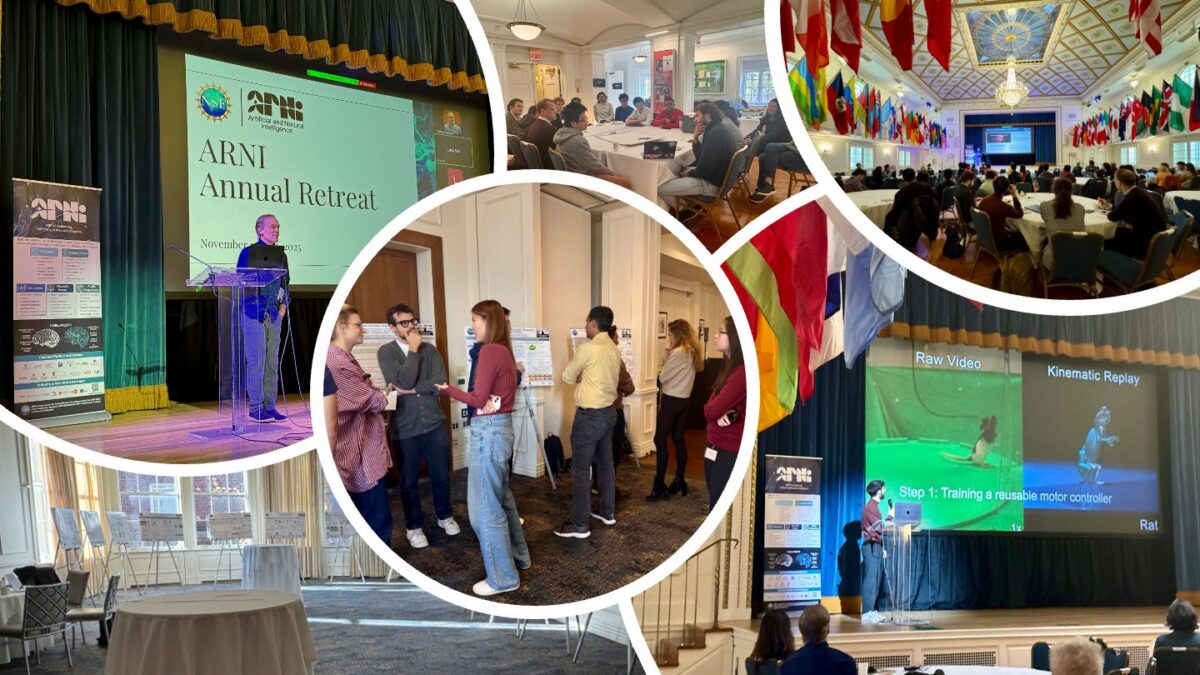
ARNI's Annual Retreat 2025 Convened
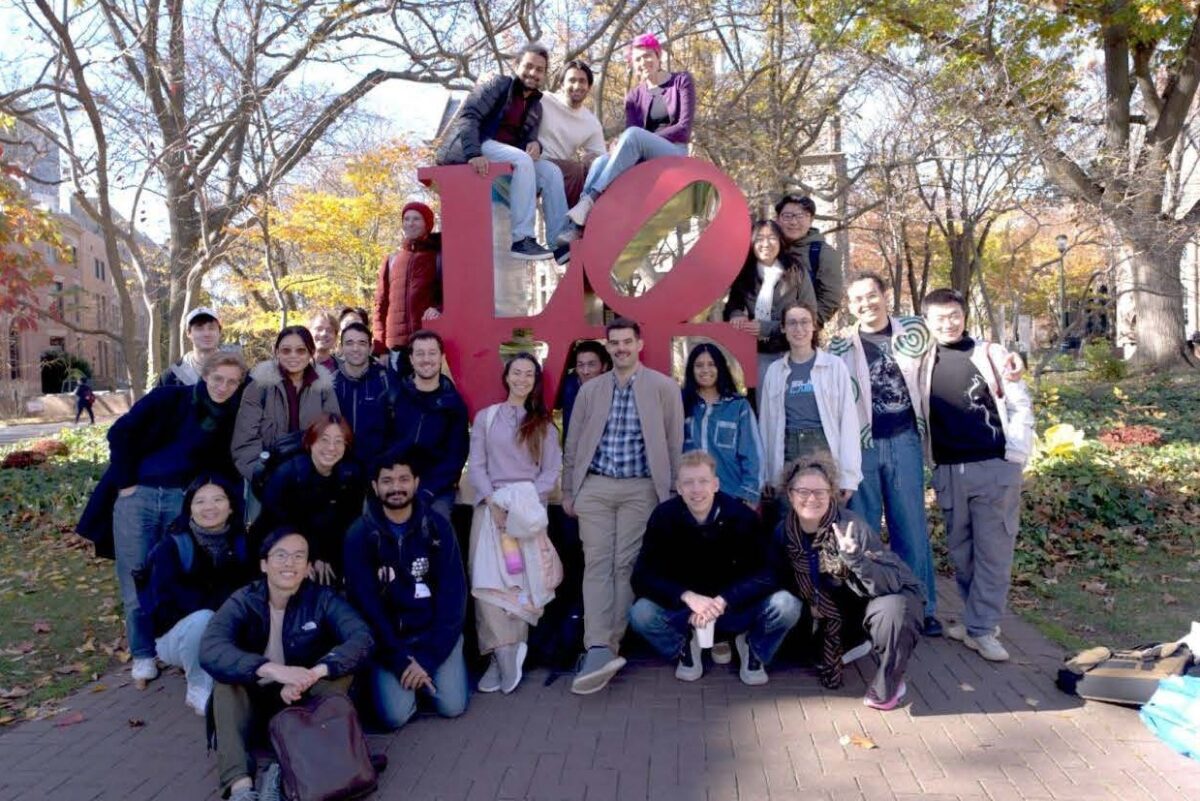
It was inspiring to see our ARNI community, faculty, postdoctoral fellows and students, come together for two days of connection, exploring big ideas, and forward-looking conversations about ARNI’s future directions.
On November 17–18, we gathered at Columbia to celebrate our Year 2 milestones and to plan an ambitious roadmap for the years ahead. The retreat emphasized what makes ARNI truly unique: intergrative, a culture of collaboration, and an exceptional cohort of students, postdocs, and faculty poised to shape the frontiers of NeuroAI.
A key highlight was the extended Working Group sessions, spanning biological learning, continual learning, frontier models for behavior, multi-resource optimization, and language & vision. These groups are strengthening cross-institution collaboration and they are generating impactful outcomes, from new models and benchmarks to emerging papers and shared research infrastructure. Together, they lay the foundation for ARNI’s next phase of more convergent research and larger-scale collaborations.
The energy, ideas, and connections at this retreat made it clear that ARNI’s momentum is accelerating. Thrilled for what we’ll build together in Years 3 and 4 as we push toward our renewal application and continue advancing NeuroAI.
Keynote Speakers
Bingni Brunton (University of Washington) — “Embodied intelligence: From connectomes to body models”
Stefano Fusi (Columbia University) — “The dynamics of the geometry of abstraction”
John Lafferty (Yale University) — “Abstraction, Relational Reasoning and CoT Information”
Research & Community Highlights
- Lightning talks from ARNI trainees and investigators
- Broader Impacts Panel
- Research talks by Haozhe Shan, Christos Papadimitriou, and Xaq Pitkow
- Use-inspired NeuroAI panel with Sean Escola (Protocol Labs), Thomas Reardon (Meta Reality Labs), and Brian A. Smith (Columbia)
- Poster session & networking showcasing the full breadth of ARNI’s research across 14 partner institutions
|
| |
|
torch_brain Buildathon
From November 12–15, ARNI researchers from Columbia (Paninski), Mila (Richards), and postdoc Mehdi Azabou joined forces with UPenn collaborator Eva Dyer and a multi-institutional team from Montréal, McGill, Georgia Tech, Caltech, CMU, UW, Silicon Labs, ANT-neuro, and Constellation. Together, they worked on the development of torch_brain, tackling key pain points in building multimodal AI models for the brain and rapidly implementing new features, integrations, and tutorials to strengthen this growing open-source ecosystem.
Workshop Highlights:
- 7 project teams: EEG, sEEG, IBL Neuropixels, Brain-to-Text, Motor Decoding, mne-python
- 3 awards: Most Contributions, Vertical Integration, Connecting the Dots
- EEG-VR data collection: In partnership with Silicon Labs & ANT-neuro
- Multimodal brain–behavior recordings
- 16 participants, 2 hours of data integrated into torch_brain
This collaboration is at the heart of ARNI’s mission, helping shape the next generation of tools for large-scale neural data and NeuroAI research.
|
| |
|
Saturday Science at Columbia's Zuckerman Institute
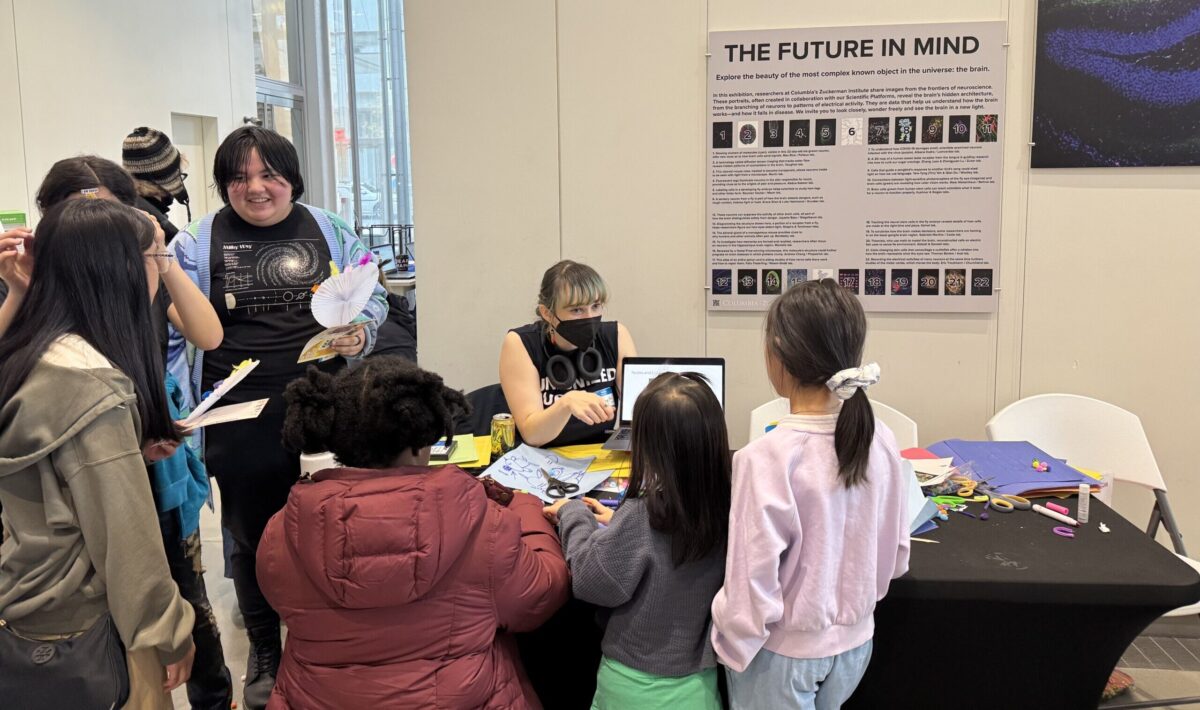
On November 22, 2025, ARNI joined the Saturday Science event for another fantastic day of promoting STEM education for youth.
Our Graduate Student Outreach Coordinator, Kathriona Guthrie-Honea, together with STEM Starters member Victoria Saltz, hosted the ARNI activity station, “Mapping Motion.” Their interactive setup invited students to explore how the brain and body work together to produce movement—turning NeuroAI concepts into hands-on learning experiences that were both fun and illuminating.
ARNI is proud to continuously co-sponsor Saturday Science and collaborate with the Zuckerman Public Programs and CUNO to build pathways that inspire the next generation of scientists and innovators. |
| |
|
Congratulations to Kathleen McKeown for receiving the ACL Lifetime Achievement Award!
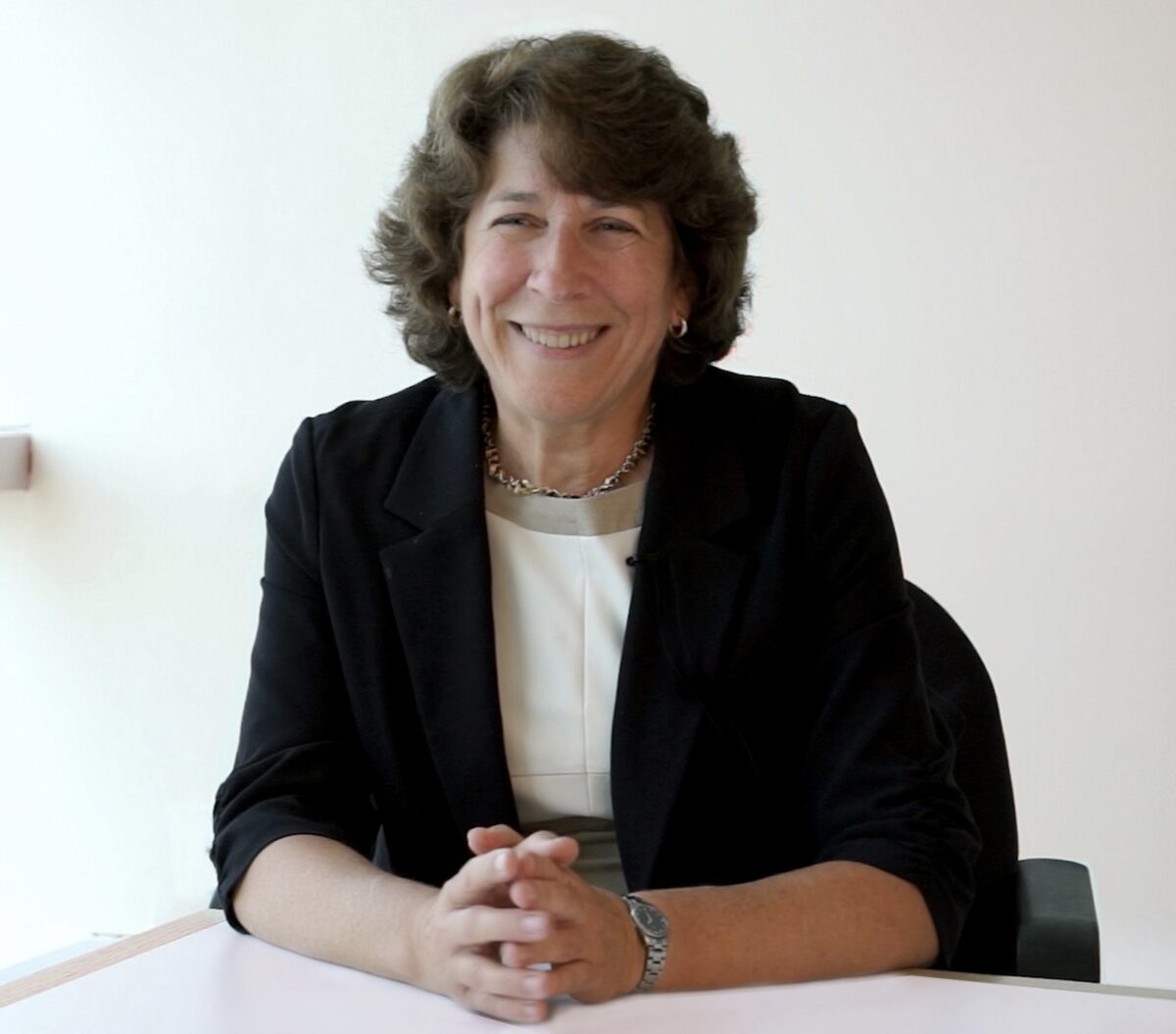
Congratulations to Kathleen McKeown, the Henry and Gertrude Rothschild Professor of Computer Science at Columbia University and ARNI co-PI, for receiving the prestigious Association for Computational Linguistics (ACL) Lifetime Achievement Award.
The award honors her outstanding achievements in Natural Language Processing and her 43 years of influential academic scholarship and research. |
| |
|
Featuring Mehdi Azabou: Launching Constellation to Pioneer the Next Frontier of AI
Mehdi Azabou joined ARNI in 2024 as a postdoctoral research scientist and has contributed significantly to ARNI’s research and education efforts. Mehdi’s outstanding path from obtaining his PhD at Georgia Tech with Eva Dyer followed by his postdoctoral tenure with ARNI, working alongside Liam Paninski and Blake Richards has culminated into his ambitious next step of launching the company: Constellation, as a co-founder. "Constellation is a NeuroAI startup building the first foundation model of brain state: a powerful model trained on multiple high quality data streams collected in unique spaces." The next frontier of AI will be in modeling human experience in all its richness.
We wish him many successes in his next steps and look forward to continue working with him from his new post. |
| |
|
Spotlight on MD Al Siam at Amazon
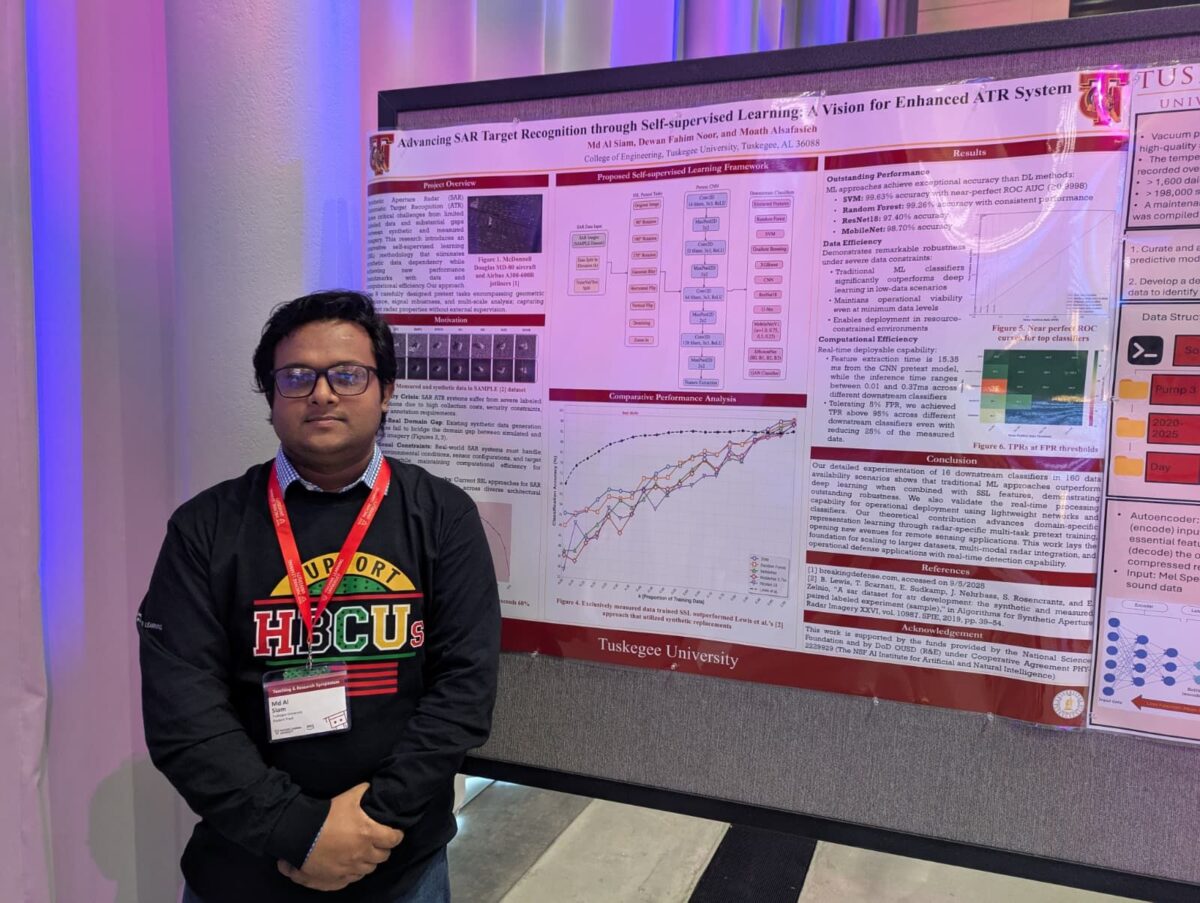
ARNI is proud to share that graduate student Md Al Siam from Tuskegee University participated in the AWS-MLU AI/ML Teaching and Research Symposium at Amazon in Arlington, VA in September!
Alongside Dr. Dewan Fahim Noor, Dr. Mandoye Ndoye, and Dr. Moath Alsafasfeh, they delivered a presentation that “addressed critical challenges in synthetic aperture radar (SAR) automatic target recognition, a field crucial for defense, surveillance, and remote sensing applications.” |
| |
|
ARNI's Summer 2026 Research Opportunity
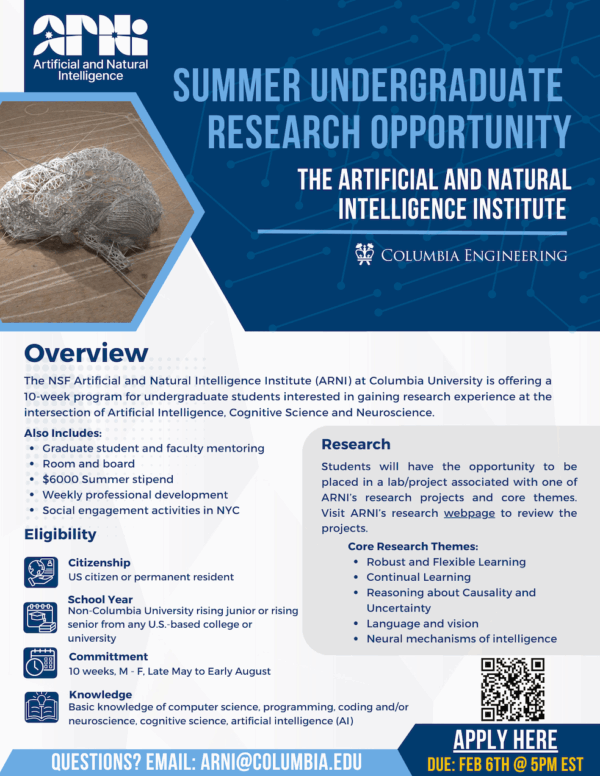
Announcing that the application for the ARNI Summer 2026 Undergraduate Research Program is open!
If you know any rising juniors or seniors interested in AI, neuroscience, cognitive science, computer science, or NeuroAI, please encourage them to apply. If you’re an eligible undergraduate, we welcome your application! |
| |
|
ARNI Suite of Research Resources |
| |
|
We’re building a shared library of research resources developed by the ARNI community including tools, datasets, and learning materials designed to advance NeuroAI for everyone. These resources are meant to support your projects and foster collaboration across ARNI and beyond.
Explore here: https://arni-institute.org/researchresources/ |
| |
|
ARNI Working Group Updates |
| |
|
ARNI Working Groups
ARNI Frontier Models for Neuroscience and Behavior Working Group (Priorly: Animal Behavior)
- Summary: The inaugural meeting will begin with a short talk summarizing the landscape of foundation models for neuroscience and behavior, highlighting recent advances, key challenges, and opportunities for improvement. This will be followed by an open discussion to define the group’s collaborative focus and shared priorities.
- Next session: Check out our events page for updates
ARNI WG Multi-resource-cost optimization of neural network models
- Summary: Neural network models are typically designed with a fixed architecture, determining the number of nodes, connectivity, and timesteps for backpropagation. While this approach helps limit resource requirements and optimize performance, it restricts the ability to explore tradeoffs between space, time, energy, and error. To address this, we aim to develop methods for quantifying resource costs and optimizing models to balance multiple constraints efficiently, benefiting both neuroscience and AI development.
- Next Session: Speaker Xaq Pitkow, Associate Professor, Neuroscience Institute at Carnegie Mellon
- Event Details: Link
ARNI Biological Learning Working Group
- Summary: The Biological Learning Working Group focuses on figuring out how the brain’s neural networks decide which connections (synapses) to adjust to improve at tasks—a process called "credit assignment.
- Next Session: Check out our events page for updates
ARNI Continual Learning Working Group
- Summary: The group's focus will be on continual learning in large language and vision models. We will begin with a review of the continual learning setting, some common high-level approaches, and popular applications, before diving into more recent research (mostly on LLMs).
- Next Session: Check out our events page for updates
|
| |
|
We would like to highlight ARNI achievements in future newsletters. Please share with us your events, papers, presentation, or any news you want to share with the ARNI community! |
| |
|