|
Dana Foundation Award!
The Dana Foundation Board of Directors has approved an 18-month, $180,000 grant to support a new ARNI K12 initiative, NeuroAI: Intelligence in Brains and Machines, Connecting Neuroscience, AI, and Society in High School Education.
ARNI’s Managing Director, Spyros Mylonas, led the grant development process. The program brings together ARNI, Neuromatch Academy, and Columbia Teachers College’s Digital Futures Institute to develop classroom-ready NeuroAI curriculum materials in collaboration with New York City teachers. The curriculum will introduce students to the shared principles of artificial and biological intelligence, the reciprocal relationship between neuroscience and AI, and the ethical and societal implications of emerging NeuroAI technologies.
The pilot program will be implemented in NYC high schools and will include teacher professional development workshops and a community learning platform. |
| |
|
Google Scholar!
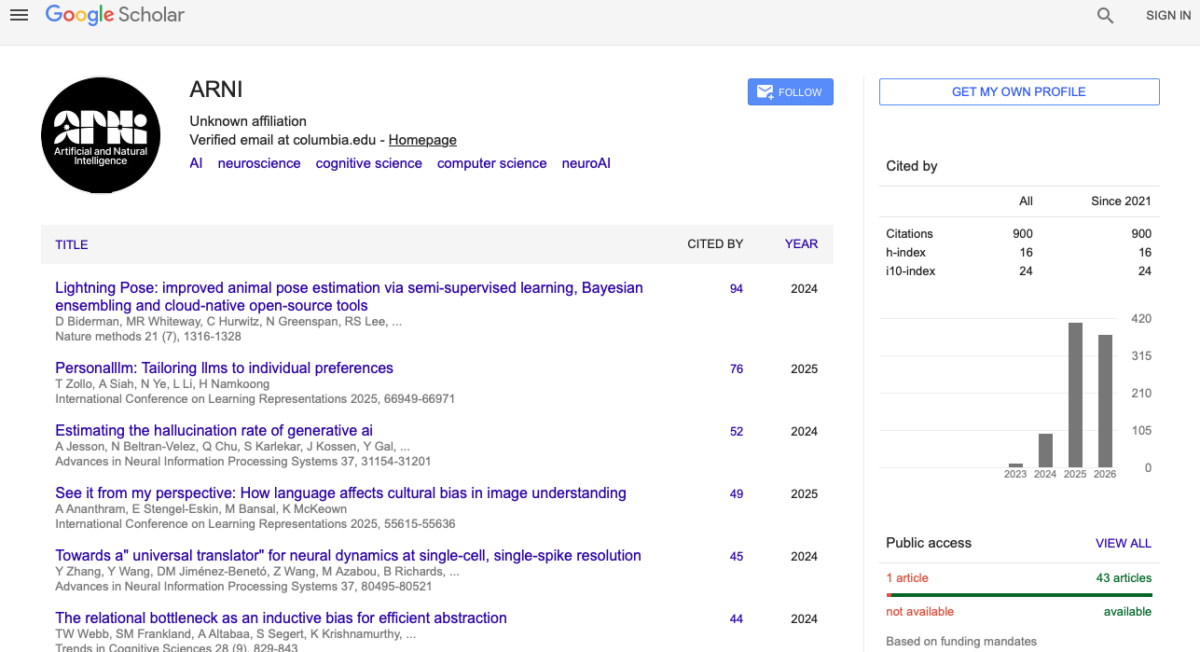
ARNI’s Google Scholar profile is now live! Visit the profile to explore publications from our research community. ARNI members are encouraged to email us with any missing publications so we can keep the profile complete and up to date.
For uniformity please use this acknowledgement in your publications:
This work is supported by the funds provided by the National Science Foundation and by DoD OUSD (R&E) under Cooperative Agreement DBI-2229929 (The NSF AI Institute for Artificial and Natural Intelligence). |
| |
|
Modeling and Understanding Human Brain Computation at Scale
Satellite Event for Cognitive Computational Neuroscience Conference 2026
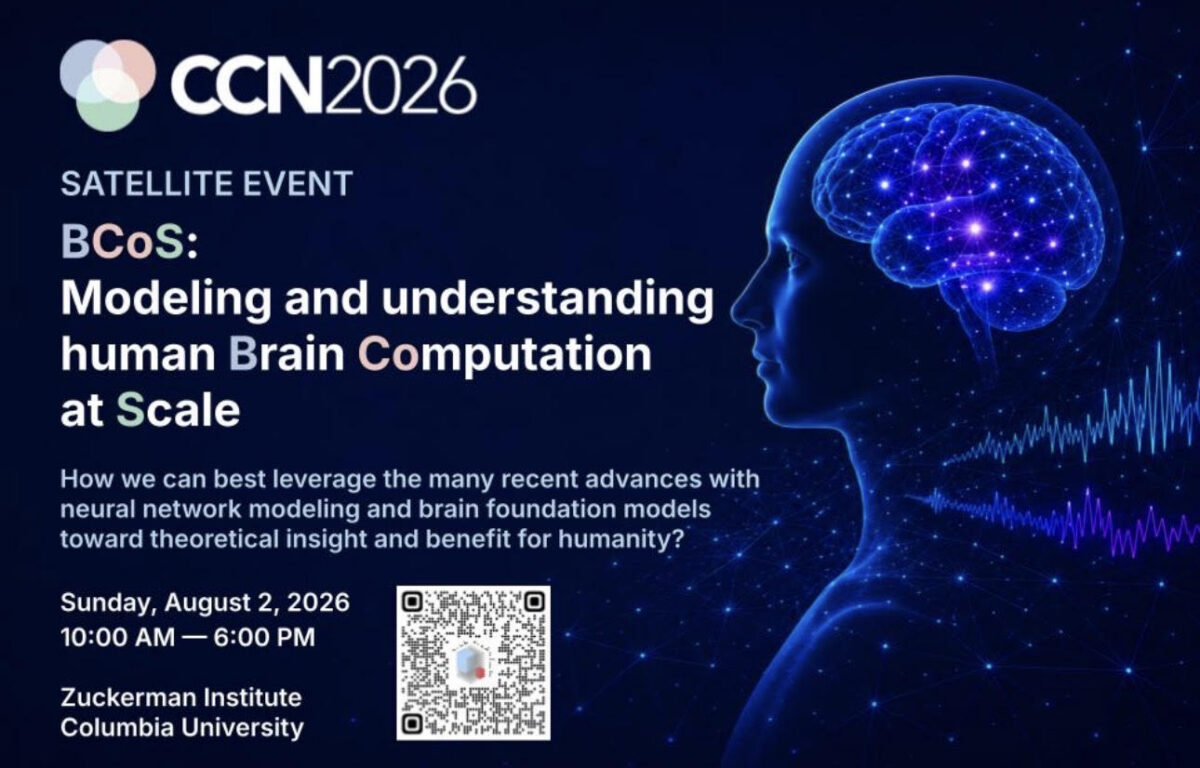
On August 2, 2026, ARNI will co-sponsor with the Zuckerman Institute a satellite event for the 2026 Cognitive Computational Neuroscience (CCN) Conference, hosted by Niko Kriegeskorte and his team.
The satellite event, "Modeling and Understanding Human Brain Computation at Scale," brings together researchers who want to leverage large-scale brain foundation models to advance our theoretical understanding of the computations that underlie human cognition and perception. |
| |
|
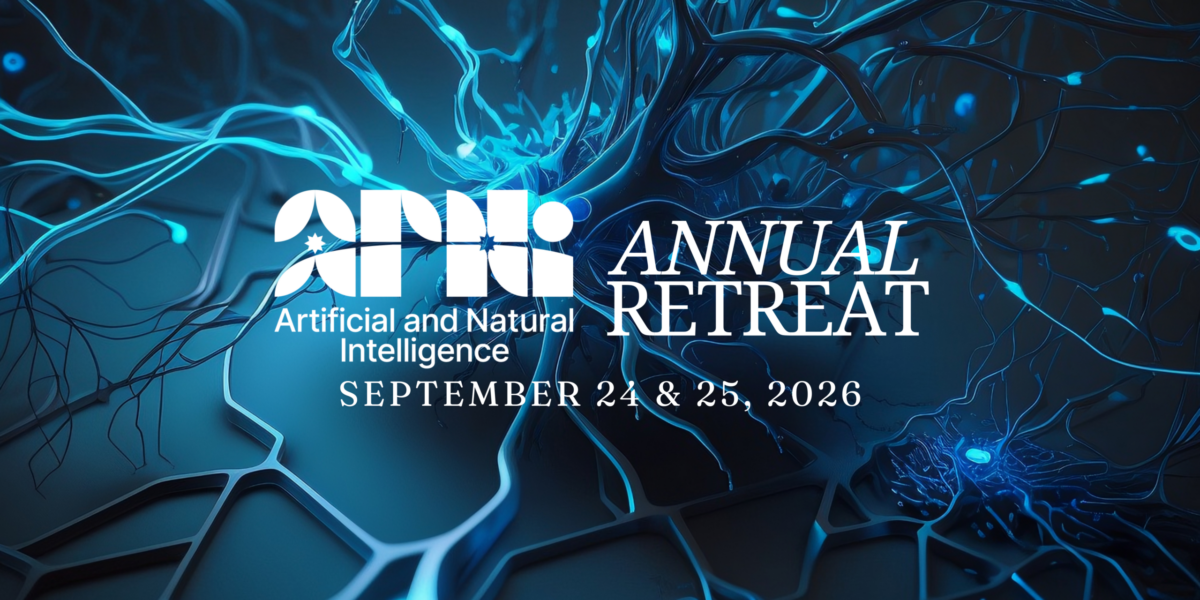
ARNI Annual Retreat 2026
ARNI is pleased to announce its 2026 Annual Retreat, taking place September 24-25 at the International House on Columbia University’s campus. This year’s retreat will focus on shaping the vision for ARNI 2.0, bringing the community together to identify strategic priorities, key initiatives, and research directions for Years 6-10.
We look forward to two days of engaging discussions, networking, and planning. ARNI faculty, trainees, and affiliates are encouraged to register early. |
| |
|
ARNI's 2026 Annual Review
On May 4-5, ARNI hosted its Year 3 Annual Review with the National Science Foundation. During the two-day visit, ARNI showcased its interdisciplinary research achievements, workforce development activities, and outreach initiatives.
The NSF review panel heard presentations on ARNI’s flagship efforts in foundation models and continual learning, and engaged with students and postdoctoral fellows through a poster session highlighting their research.
The review resulted in a positive assessment of ARNI’s progress and impact, helping position the institute for its renewal proposal in September 2027. |
| |
|
Columbia Engineering Lecture in AI
Featuring Richard Zemel
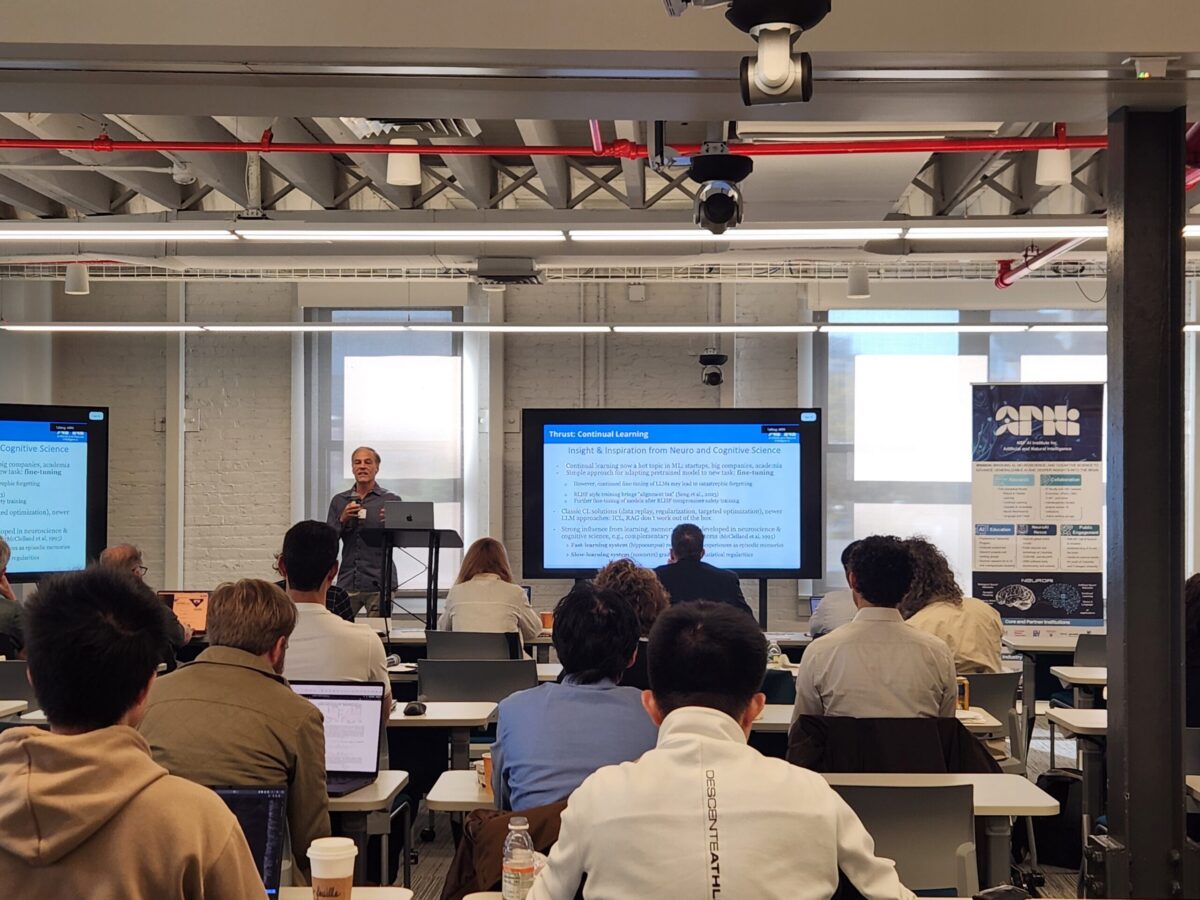
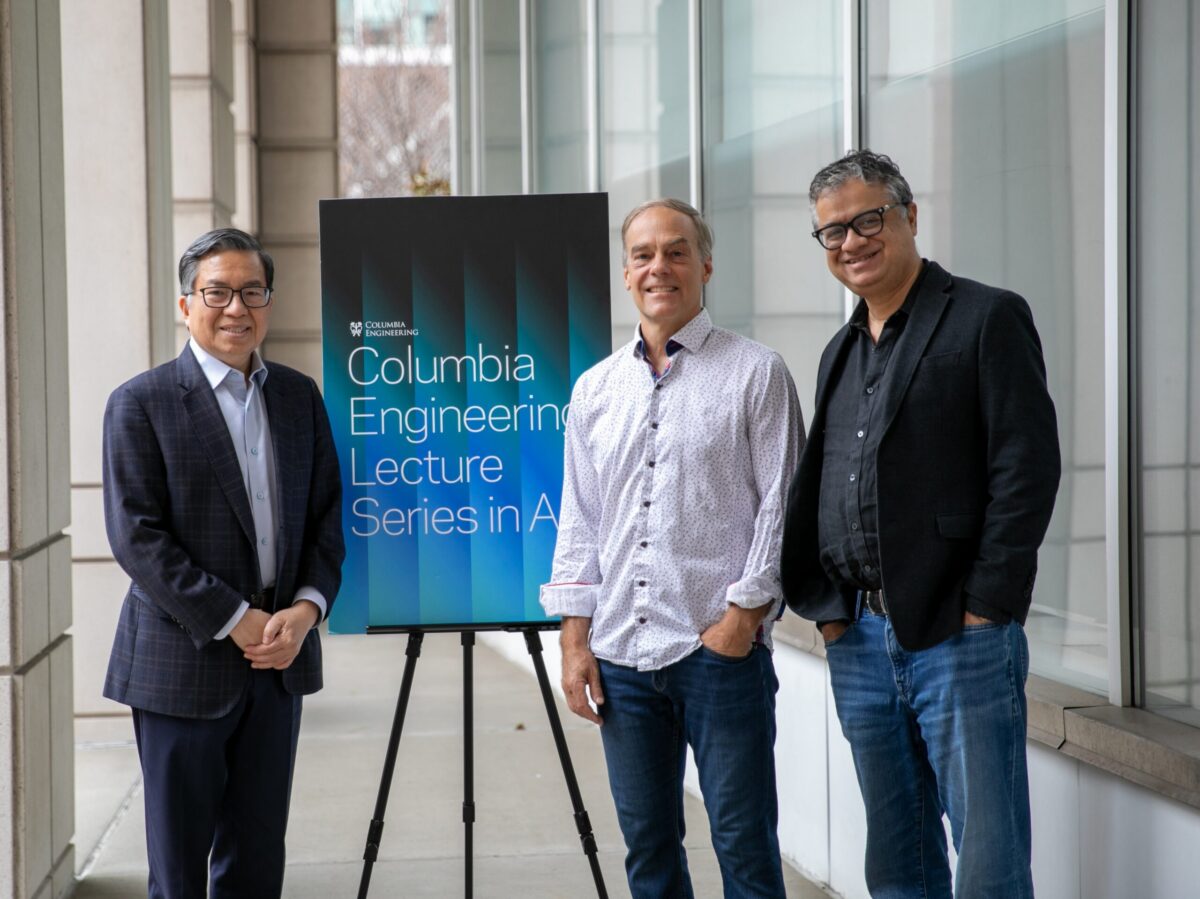
ARNI Director, Richard Zemel, was the featured speaker for the Columbia Engineering Lecture in AI Series. His talk, “Integrating Past and Present in Continual Learning,” explored how AI systems can learn new tasks over time without forgetting previously acquired knowledge, similar to the way humans learn and adapt.
The presentation highlighted key challenges and recent advances in continual learning research, including efforts within ARNI. There were over 90 attendees from across Columbia University for this engaging and insightful discussion on the future of AI research. |
| |
|
ARNI Distinguished Seminar Series
Ellie Pavlick (Brown University)
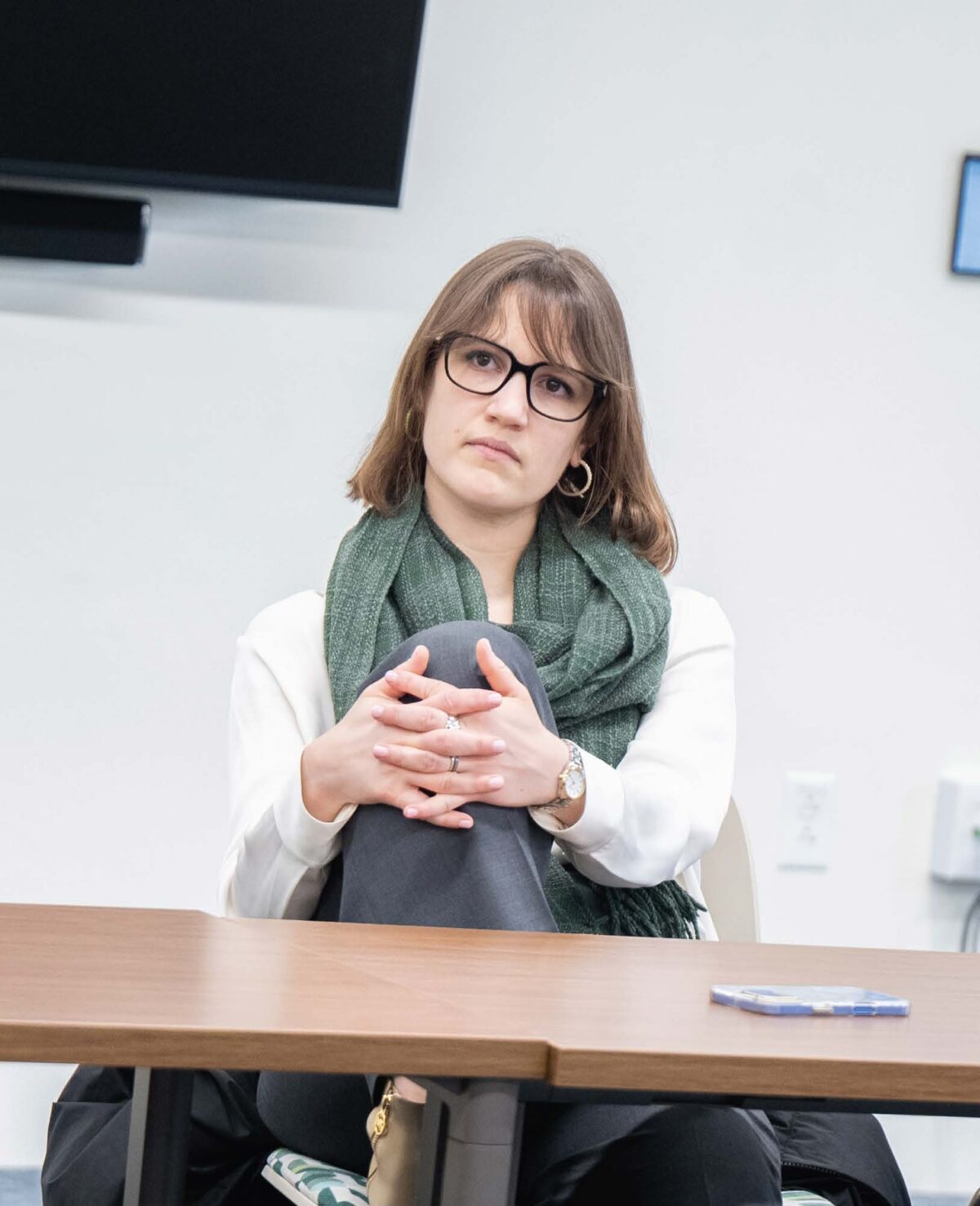
On April 24, ARNI hosted Ellie Pavlick as the Distinguished Seminar Series Speaker. Dr. Pavlick, Assistant Professor of Computer Science and Linguistics at Brown University and Director of the NSF Institute on Interaction for AI Assistants (ARIA), presented her talk, “(How) Does AI Think?”. Her presentation explored recent advances in AI interpretability, examining how AI systems develop complex internal structures while remaining highly context-sensitive, and discussed the broader implications of comparing AI and human cognition. Many students and faculty attended this talk and were excited to connect with Dr. Pavlick on her research. |
| |
|
ARNI Suite of Research Resources |
| |
|
We’re building a shared library of research resources developed by the ARNI community including tools, datasets, and learning materials designed to advance NeuroAI for everyone. These resources are meant to support your projects and foster collaboration across ARNI and beyond.
Explore here: https://arni-institute.org/researchresources/ |
| |
|
ARNI Working Group Updates |
| |
|
ARNI Working Groups
ARNI Frontier Models for Neuroscience and Behavior Working Group (Priorly: Animal Behavior)
- Summary: The inaugural meeting will begin with a short talk summarizing the landscape of foundation models for neuroscience and behavior, highlighting recent advances, key challenges, and opportunities for improvement. This will be followed by an open discussion to define the group’s collaborative focus and shared priorities.
- Next session: Check out our events page for updates
ARNI WG Multi-resource-cost optimization of neural network models
- Summary: Neural network models are typically designed with a fixed architecture, determining the number of nodes, connectivity, and timesteps for backpropagation. While this approach helps limit resource requirements and optimize performance, it restricts the ability to explore tradeoffs between space, time, energy, and error. To address this, we aim to develop methods for quantifying resource costs and optimizing models to balance multiple constraints efficiently, benefiting both neuroscience and AI development.
- Next session: Check out our events page for updates
ARNI Biological Learning Working Group
- Summary: The Biological Learning Working Group focuses on figuring out how the brain’s neural networks decide which connections (synapses) to adjust to improve at tasks—a process called "credit assignment.
- Next Session: Check out our events page for updates
ARNI Continual Learning Working Group
- Summary: The group's focus will be on continual learning in large language and vision models. We will begin with a review of the continual learning setting, some common high-level approaches, and popular applications, before diving into more recent research (mostly on LLMs).
- Next Session: Check out our events page for updates
ARNI Language & Vision Working Group
- The ARNI Language & Vision Working Group aims to bring together researchers across neuroscience, cognitive science, computer science, and AI to collaboratively advance our understanding of how humans and machines construct multimodal experiences. Its goal is to create a space for discussing ongoing language- and vision-focused projects, identifying natural points of overlap, and transforming them into larger, interdisciplinary initiatives. Grounded in the idea that language and vision form a dynamic, symbiotic system rather than isolated modules, the group seeks to explore how this integration is represented in the brain and in the machine. Strengthening collaboration between these domains is essential for building the next generation of AI systems that learn from continual, multimodal input, reflect human cognitive principles, and ultimately support real-world human needs.
- Next session: Check out our events page for updates
- At the end of the news letter you can read more about the other working groups.
|
| |
|
We would like to highlight ARNI achievements in future newsletters. Please share with us your events, papers, presentation, or any news you want to share with the ARNI community! |
| |
|