

- This event has passed.
Speaker:Divyansha Lachi (UPenn) and Thorir Ingolfsson (ETH)– ARNI Frontier Models for Neuroscience and Behavior Working Group
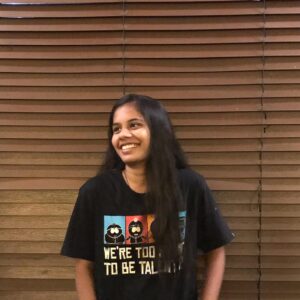
Divyansha’s talk
Title: Scaling Neural Motor Decoding via Decoupled Behavioral Pretraining
Abstract:
Recent neural decoding approaches achieve strong performance by training on large collections of paired neural-behavioral recordings, but such datasets are expensive, invasive, and difficult to scale. In contrast, behavioral data is abundant and easy to collect, raising the question of whether neural decoding can benefit from decoupling behavioral and neural representation learning. We introduce BeeMO, a flexible multi-session framework that enables training with arbitrary mixtures of paired neural-behavioral recordings and unpaired behavioral data. A behavior decoder learns movement dynamics directly from behavioral trajectories, while neural activity is incorporated through cross-attention layers when available, allowing behavioral and neural supervision to scale independently. By decoupling neural and behavioral data, we unlock a new dimension for scaling: unpaired behavioral data, which is substantially cheaper and easier to collect than paired neural recordings, can be used directly to improve decoding performance. Across multiple intracortical motor datasets and tasks in nonhuman primates, we show that incorporating unpaired behavioral data consistently improves decoding performance, particularly […], and that incorporating task-aligned behavioral trajectories can further improve transfer. We further show that behavior-only pretraining, without any neural pretraining, outperforms single-session supervised baselines and is comparable to models pretrained on substantially larger neural datasets. Together, our results suggest that scaling behavioral data offers a practical and cost-effective path toward neural decoding models that generalize across subjects and tasks.
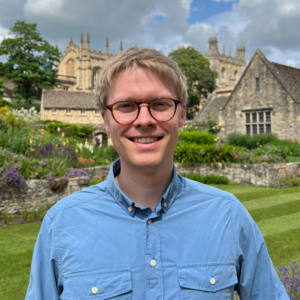
Thorir’s talk
Title: Foundation Models for Wearables: From EEG and EMG to Multimodal Models at the Edge
Abstract:
Wearable devices can continuously record EEG, EMG, ECG, and PPG, but labels are scarce, electrode layouts vary across devices, and inference must fit within a power budget of tens of milliwatts. This talk gives an overview of our work at ETH Zürich on foundation models built under these constraints. I will start with EEG: LUNA, a topology-agnostic model that handles arbitrary electrode montages, and FEMBA, a state-space alternative to transformers that scales linearly with sequence length. I will then turn to the pre-training objective, comparing masked reconstruction with latent-space prediction (LeJEPA) in LuMamba and examining what each learns. Next, I will present TinyMyo, a compact EMG foundation model that transfers across hand gesture classification, hand kinematic regression, and speech production and recognition, and runs on an ultra-low-power microcontroller. Finally, PanLUNA extends the approach to joint modeling of EEG, ECG, and PPG.
Zoom: Upon request @ [email protected]